

India’s student suicide rate surpasses population growth rate, reveals NCRB data

News Network
August 29, 2024

student.jpg

New Delhi: Incidents of student suicides in India have grown at an alarming annual rate, surpassing the population growth rate and overall suicide trends, according to a new report.

Based on the National Crime Records Bureau (NCRB) data, the "Student suicides: An epidemic sweeping India" report was launched on Wednesday at the Annual IC3 Conference and Expo 2024.

The report pointed out that while the overall suicide numbers increased by 2 per cent annually, student suicides cases surged by 4 per cent, despite a likely "under reporting" of student suicide cases. "Over the past two decades, student suicides have grown at an alarming annual rate of 4 per cent, double the national average. In 2022, male students constituted 53 pc (per cent) of the total student suicides. Between 2021 and 2022, male student suicides decreased by 6 per cent while female student suicides increased by 7 per cent," noted the report compiled by IC3 Institute.

"The incidence of student suicides continues to surpass both population growth rates and overall suicide trends. Over the last decade, while the population of 0-24-year-olds reduced from 582 million to 581 million, the number of student suicides increased from 6,654 to 13,044," it added.

The IC3 Institute is a volunteer-based organisation that provides support to high schools around the world through guidance and training resources for their administrators, teachers and counsellors to help establish and maintain robust career and college counselling departments.

According to the report, Maharashtra, Tamil Nadu, and Madhya Pradesh are identified as the states with the highest number of student suicides, together accounting for one-third of the national total.

Southern states and union territories collectively contribute 29 per cent of these cases, while Rajasthan, known for its high-stakes academic environment, ranks 10th, highlighting the intense pressure associated with coaching hubs like Kota.

"The data compiled by the NCRB is based on police-recorded first information reports (FIRs). However, it is important to acknowledge that the actual number of student suicides is likely underreported. This under-reporting can be attributed to several factors, including the social stigma surrounding suicide and the criminalisation of attempted and assisted suicide under Section 309 of the Indian Penal Code.

Although the 2017 Mental Healthcare Act decriminalises suicide attempts for individuals with mental illness, the legacy of criminalisation continues to impact reporting practices, it said.

"Moreover, there are significant data discrepancies due to the lack of a robust data collection system, particularly in rural areas, where reporting is less consistent compared to urban regions," it said.

Ganesh Kohli, the Founder of the IC3 Movement, said the report serves as a reminder of the urgent need to address mental health challenges within our learning institutions.

"Our educational focus must shift to fostering the competencies of our learners such that it supports their overall well-being, versus pushing them to compete amongst each other.

"It is imperative that we build a systematic, comprehensive, and robust career and college counselling system within each institution, while seamlessly integrating the same within the learning curriculum," he said.

Additionally, the report noted a dramatic increase in student suicides, with male suicides rising by 50 per cent and female suicides by 61 per cent over the past decade.

"Both genders have experienced an average annual increase of 5 pc (per cent) in the last five years. These alarming statistics underscore the critical need for enhanced counseling infrastructure and a deeper understanding of student aspirations.

"Addressing these gaps is essential for shifting the focus from competitive pressures to nurturing core competencies and well- being, thereby supporting students more effectively and preventing such tragedies," the report said.

Comments

Add new comment

  • Coastaldigest.com reserves the right to delete or block any comments.
  • Coastaldigset.com is not responsible for its readers’ comments.
  • Comments that are abusive, incendiary or irrelevant are strictly prohibited.
  • Please use a genuine email ID and provide your name to avoid reject.
News Network
December 13,2025

New Delhi: School-going children are picking up drug and smoking habits and engaging in consumption of alcohol, with the average age of introduction to such harmful substances found to be around 13 years, suggesting a need for earlier interventions as early as primary school, a multi-city survey by AIIMS-Delhi said.

The findings also showed substance use increased in higher grades, with grade XI/XII students two times more likely to report use of substances when compared with grade VIII students. This emphasised the importance of continued prevention and intervention through middle and high school.

The study led by Dr Anju Dhawan of AIIMS's National Drug Dependence Treatment Centre, published in the National Medical Journal of India this month, looks at adolescent substance use across diverse regions.

The survey included 5,920 students from classes 8, 9, 11 and 12 in urban government, private and rural schools across 10 cities -- Bengaluru, Chandigarh, Delhi, Dibrugarh, Hyderabad, Imphal, Jammu, Lucknow, Mumbai, and Ranchi. The data were collected between May 2018 and June 2019.

The average age of initiation for any substance was 12.9 (2.8) years. It was lowest for inhalants (11.3 years) followed by heroin (12.3 years) and opioid pharmaceuticals (without prescription; 12.5 years).

Overall, 15.1 per cent of participants reported lifetime use, 10.3 per cent reported past year use, and 7.2 per cent reported use in the past month of any substance, the study found.

The most common substances used in the past year, after tobacco (4 per cent) and alcohol (3.8 per cent), were opioids (2.8 per cent), followed by cannabis (2 per cent) and inhalants (1.9 per cent). Use of non-prescribed pharmaceutical opioids was most common among opioid users (90.2 per cent).

On being asked, 'Do you think this substance is easily available for a person of your age' separately for each substance category, nearly half the students (46.3 per cent) endorsed that tobacco products and more than one-third of the students (36.5 per cent) agreed that a person of their age can easily procure alcohol products.

Similarly, for Bhang (21.9 per cent), ganja/charas (16.1 per cent), inhalants (15.2 per cent), sedatives (13.7 per cent), opium and heroin (10 per cent each), the students endorsed that these can be easily procured.

About 95 per cent of the children, irrespective of their grade, agreed with the statement that 'drug use is harmful'.

The rates of substance use (any) among boys were significantly higher than those of girls for substance use (ever), use in the past year and use in the past 30 days. Compared to grade VIII students, grade IX students were more likely, and grade XI/XII students were twice as likely to have used any substance (ever).

The likelihood of past-year use of any substance was also higher for grade IX students and for grade XI/XII students as compared to grade VIII students.

About 40 per cent of students mentioned that they had a family member who used tobacco or alcohol each. The use of cannabis (any product) and opioid (any product) by a family member was reported by 8.2 per cent and 3.9 per cent of students, respectively, while the use of other substances, such as inhalants/sedatives by family was 2-3 per cent, the study found.

A relatively smaller percentage of students reported use of tobacco or alcohol among peers as compared to among family members, while a higher percentage reported inhalants, sedatives, cannabis or opioid use among peers.

Children using substances (past year) compared to non-users reported significantly higher any substance use by their family members and peers.

There were 25.7 per cent students who replied 'yes' to the question 'conflicts/fights often occur in your family'. Most students also replied affirmatively to 'family members are aware of how their time is being spent' and 'damily members are aware of with whom they spend their time'.

Comments

Add new comment

  • Coastaldigest.com reserves the right to delete or block any comments.
  • Coastaldigset.com is not responsible for its readers’ comments.
  • Comments that are abusive, incendiary or irrelevant are strictly prohibited.
  • Please use a genuine email ID and provide your name to avoid reject.
News Network
December 15,2025

Mangaluru, Dec 15: Educational institutions in Mangaluru that rely on the popular Mangala Stadium for their annual sports events are bracing for an inconvenience as the city's key sporting venue is set to close its gates for a significant upgrade. The stadium is expected to be unavailable for approximately two months starting from January 15, 2026.

The closure is necessitated by a proposed overhaul of the stadium's facilities, with a special focus on upgrading the synthetic track. Pradeep Dsouza, Assistant Director of the District of Youth Empowerment and Sports (DYES), Dakshina Kannada, confirmed the development.

"Experts have visited the stadium, conducted a thorough inspection, and have given the go-ahead for a complete makeover," Dsouza stated. "Funds have been allocated for the project, and we are currently awaiting the final green signal from state officials to commence the work. We anticipate that the work will likely begin in the second week of January. Consequently, we have stopped renting out the stadium to colleges and other organizations in preparation for the upgrade."

The timing presents a logistical challenge for colleges, as many schools have already concluded their sports meets.

"Colleges will now be organizing their events and will need to find alternative locations to host their sports meets," Dsouza added. He suggested a few potential venues, including the Dakshina Kannada police ground, University College grounds, Panambur grounds, Swaraj Maidan in Moodbidri, and the Mangalore University sports grounds in Konaje.

However, many institutions note that finding a comparable venue will be difficult. While the DK police ground and University College grounds are closer to the city center, they do not possess the extensive facilities and infrastructure offered by Mangala Stadium.

Dr. P Dayananda Pai - P Satisha Govt First Grade College, Carstreet, is one such institution dependent on the stadium. Principal Jayakar Bhandary expressed hope for a swift completion of the work. "We expect the work to be completed at the earliest. If not, we will be forced to look for other venues to host the sports day for our students," Bhandary said, highlighting the pressing need for the city's main sporting facility.

Comments

Add new comment

  • Coastaldigest.com reserves the right to delete or block any comments.
  • Coastaldigset.com is not responsible for its readers’ comments.
  • Comments that are abusive, incendiary or irrelevant are strictly prohibited.
  • Please use a genuine email ID and provide your name to avoid reject.
coastaldigest.com news network
December 2,2025

karkala.jpg

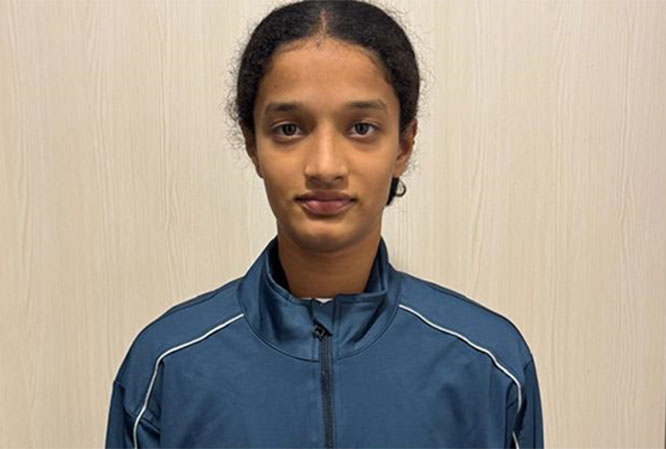
Udupi, Dec 2: A wave of regional pride is sweeping through Udupi district as Shagun S Verma Hegde, a talented Class 9 student from Christ King English Medium High School, Karkala, has been named the captain of the Indian National Team for the Under-15 Girls’ Volleyball Championship.

Shagun holds the unique distinction of being the sole player from Karnataka selected to represent the country in the prestigious international tournament. The championship, organized by the School Games Federation, is scheduled to take place in Shangluo, China, from December 3 to 13, where Shagun will lead the national squad.

A Remarkable Journey to the Top

Shagun’s selection is a testament to her dedication and exceptional skill on the court. Her journey included several rigorous rounds of selection:

•    She was the only player from Udupi district to qualify for the state-level selection camp.

•    Out of eight players from Karnataka who advanced to the national selection camp in Pune, Maharashtra, Shagun was the only one to secure a place in the final national squad.

•    The national camp saw participation from approximately 200 players, which was shortlisted to 23. Shagun not only made the final cut but was also ranked as the second-best player overall, solidifying her leadership role.

Shagun, who is the daughter of Sandesh Verma and Shruthiraj of Kallotte, Karkala, has trained under experienced coaches Santosh D’Souza, Jeevan D’Silva, Jairaj Poojary, and Ramesh. Her selection as the team captain has brought profound honour to her family, school, the Udupi district, and the entire state of Karnataka.

Comments

Add new comment

  • Coastaldigest.com reserves the right to delete or block any comments.
  • Coastaldigset.com is not responsible for its readers’ comments.
  • Comments that are abusive, incendiary or irrelevant are strictly prohibited.
  • Please use a genuine email ID and provide your name to avoid reject.