CD Web Desk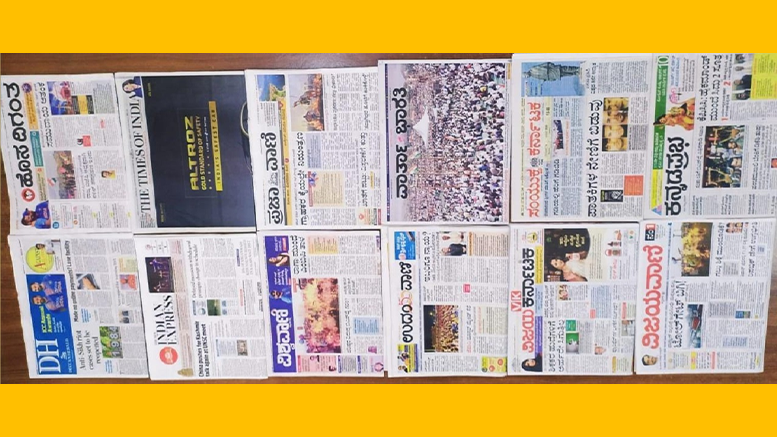
Even as Muslims of the undivided Dakshina Kannada district broke out of the “spiral of silence” and led an unprecedented protest against the CAA, NPR, NRC, and the categorised mistreatment of minorities by the police across the country, mainstream media largely turned a blind eye. About two lakh people converged at Shah Garden Maidan in Mangaluru’s Adyar on January 15, 2020, waving the tricolor and asserting themselves—a date that will be remembered in coastal Karnataka’s history.
The gathering, the largest in Mangaluru’s history, was peaceful, law-abiding, and respectful. While slogans of ‘Azaadi’ reverberated in the air, protesters made way for vehicles and passersby, helped the elderly, and ensured the safety of women. Though most participants were Muslims, they collectively identified as “We, the people of India.”
The district administration and police had not anticipated such a massive turnout, even after blocking highways and banning public transport from 9 a.m. to 9 p.m. Many believe these measures were intended to discourage participation and create fear among people still grappling with the unjustifiable deaths of two citizens in a police firing a few weeks prior.
What surprised protesters most was the mainstream media’s limited coverage. Shockingly, the event did not make the front pages of any state-level Kannada dailies except for the city-based Vaartha Bharathi. With The Hindu observing a Makar Sankranti holiday, most English newspapers relegated the story to inner pages. National TV channels were also reluctant to cover the protest until NDTV telecast the event.
This uneasy relationship between media and minorities in coastal Karnataka has existed for years, but the non-coverage of the January 15 protest represents a significant departure from traditional biases. In the past, non-Sangh communities were often demonised; now, their voices were almost entirely ignored. The lack of coverage sparked strong responses on social media, where netizens criticized mainstream media’s approach.