CD Web Desk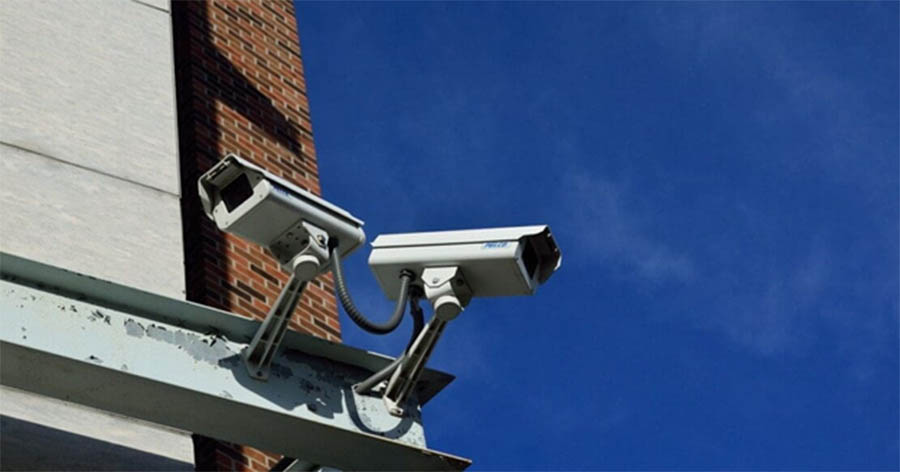
Commercial facilities face security challenges due to high footfall, multiple access points, and valuable assets. Warehouses, offices, retail spaces, and industrial sites must protect against unauthorised entry, asset loss, and safety incidents while keeping operations smooth. Standard surveillance often lacks the clarity needed for effective monitoring and review.
An HD CCTV camera provides sharper visuals and more reliable recordings than older systems. High-definition footage improves visibility across large premises and helps facility managers maintain consistent oversight. As commercial spaces grow in scale and complexity, clear video has become essential for ensuring safety, protecting assets, and supporting efficient operations.
Increasing Security Requirements in Commercial Facilities
Larger areas naturally create blind spots, while multiple entry and exit points make continuous monitoring more complex. Facilities that manage inventory, machinery, or restricted operational zones require dependable visual coverage throughout the day.
Common challenges include:
● Unauthorised access through secondary or less visible entry points
● Movement across restricted or sensitive areas
● Monitoring activity across wide floor spaces without coverage gaps
● Managing security during peak operational hours
Standard surveillance setups may struggle in these conditions due to limited resolution or inconsistent performance in low-light environments. Higher-definition systems help reduce these limitations by providing clearer and more consistent visual information.
How High-Definition Surveillance Improves Monitoring
The main advantage of high-definition surveillance lies in image quality. Improved resolution allows camera systems to capture finer visual details that lower-resolution systems may miss. This improves both real-time monitoring and recorded footage review.
Key benefits include:
● Clearer visual output that improves situational awareness
● More reliable visibility in indoor or low-light conditions
● Better consistency when monitoring wide or open areas
● Improves the usefulness of recorded footage during reviews
These improvements help security teams respond more efficiently, as clearer visuals reduce uncertainty during incident assessment.
Importance of Clear Footage for Incident Review
Recorded surveillance footage becomes especially important after an incident occurs. Whether reviewing unauthorised access, safety lapses, or operational irregularities, the value of footage depends on how clearly events can be seen and understood.
High-quality video surveillance supports:
● Clearer internal security reviews
● More accurate reconstruction of events
● Better coordination between security and operations teams
When footage lacks clarity, investigations may take longer and produce inconclusive outcomes. Clear recordings allow facility managers to rely on visual evidence rather than assumptions.
Preventive Role of Modern Surveillance Systems
Surveillance also plays a role in preventive planning. Continuous monitoring helps identify recurring patterns, vulnerable areas, or operational blind spots. Over time, this information supports improvements in access control, layout planning, and security protocols.
Modern surveillance systems contribute by:
● Offering consistent visual coverage across monitored zones
● Helping identify areas that require additional safeguards
● Supporting early intervention when irregular activity appears
This approach allows facilities to strengthen security planning rather than relying only on reactive measures.
Limitations of Traditional Surveillance Systems
Older surveillance systems were designed for smaller spaces with simpler monitoring needs. In large commercial environments, their limitations become more noticeable.
Common issues include:
● Reduced clarity when capturing activity at a distance
● Poor performance in uneven or low-light conditions
● Difficulty distinguishing individuals or objects in crowded areas
● Gaps in coverage across expansive premises
These constraints reduce the effectiveness of CCTV security cameras in demanding commercial environments. Upgrading to higher-definition solutions helps address these gaps by delivering more consistent visual performance.
Choosing Suitable Surveillance Solutions for Commercial Premises
Selecting a surveillance solution requires careful consideration of both technical and environmental factors. Commercial facilities often need systems that perform reliably across varied operating conditions.
Key factors to evaluate include:
● Resolution levels suitable for the size and layout of the premises
● Visibility performance in low-light or indoor environments
● Secure recording and storage mechanisms
● Compatibility with existing access and security infrastructure
● Build quality suitable for indoor or outdoor commercial use
Security solution providers in India, such as Godrej Enterprises Group, offer high-definition surveillance systems designed for premise security across commercial environments. Assessing systems based on operational needs helps ensure long-term reliability.
Supporting Operational Awareness Without Overreach
In addition to security, surveillance supports general operational awareness. Facility managers can remotely confirm activity levels, check restricted zones, and ensure safety protocols are followed across large premises.
Surveillance systems support this by:
● Allowing remote visibility without constant physical supervision
● Helping confirm that controlled areas remain secure
● Supporting safety monitoring in operational zones
This application remains focused on infrastructure oversight rather than individual monitoring, making it suitable for professional commercial settings.
Conclusion
Commercial facilities face increasing pressure to maintain secure and well-monitored environments. As premises grow larger and operations become more complex, the limitations of traditional surveillance become evident. An HD CCTV camera provides clearer visibility, more reliable recordings, and consistent monitoring across wide areas. By supporting effective incident review, preventive planning, and infrastructure oversight, modern video surveillance strengthens overall security management. When selected thoughtfully, CCTV security cameras form an essential part of a well-planned commercial security framework.