CD Web Desk
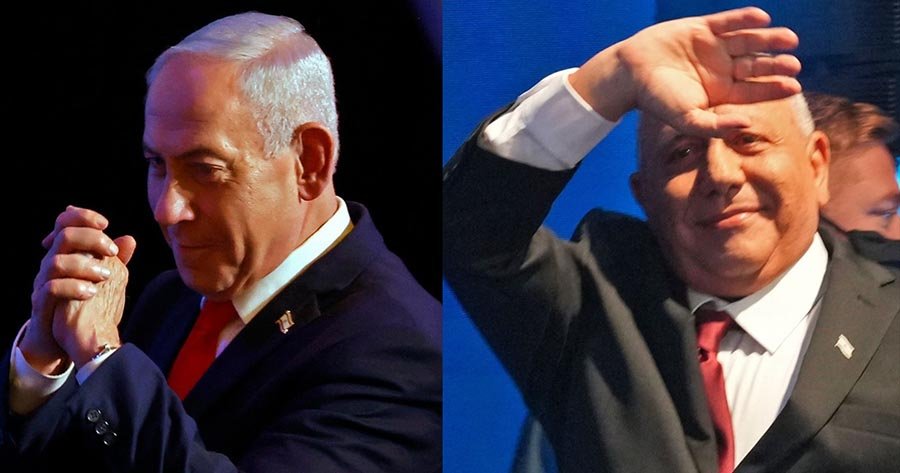
After the completion of vote counting in Israel, neither Prime Minister Benjamin Netanyahu’s bloc nor former military chief Gadi Eisenkot’s bloc secured the majority required to form the new government.
Netanyahu’s coalition of right-wing and far-right parties won 53 of the Knesset’s 120 seats and the Opposition bloc secured 48 seats.
The final voter turnout was 77.9 percent of, the highest figure in decades, with 5,716,665 votes cast.
According to the final results, published by the Central Elections Committee (CEC), Netanyahu’s Likud secured 27 seats, Eisenkot’s Yashar 21, B’Yachad 12, the Joint List 11, The Democrats 8, Ra’am 8, Yisrael Beytenu 7, United Torah Judaism 7, Otzma Yehudit 7, Shas 6 and Religious Zionism 6.
The full official results are slated to be presented to President Isaac Herzog on Wednesday, after the CEC completes any final inquiries into errors or complaints, reported the Times of Israel.
The results has made the Arab party groupings Ra’am and the Joint List potential kingmakers, with the two winning a combined 19 seats.
Since both the ruling and Opposition alliances could not reach the required 61 seats, the negotiations to form a government that could last weeks.
There is also the prospect of another election remaining if talks fail.
Meanwhile, Netanyahu’s camp has been actively voicing the unproven allegation that Arab-Israeli groups received foreign funding to influence the vote, accusations rejected by both Arab-majority lists and Qatar.
Reports noted that Israel’s Shin Bet domestic security service is investigating suspected irregularities. However, they said the probe was not intended to “cast aspersions or place blame on an entire sector that went out to vote in a democratic and lawful manner”.
Netanyahu and his allies raised allegations that Ra’am received money from Qatar, the energy-rich Gulf powerbroker that has channels to Hamas, to finance vote-buying operations.
“The Ra’amgate scandal is a political earthquake. Israel’s elections have been stolen!” Netanyahu’s Likud party said on Thursday.
However, Ra’am leader Mansour Abbas denied any wrongdoing and welcomed an investigation, while the Joint List accused Netanyahu and his allies of conducting a “campaign of incitement” out of fear of Arab voters’ growing political influence.
So far, government officials have not provided any evidence to back the allegations.
Acting Central Elections Committee Director General Dean Livne had on Thursday rejected allegations of widespread fraud in the election as baseless, reported the Times of Israel.
“Reports published throughout the day are entirely unfounded,” Livne said, noting that the investigation “will not affect the final results submitted to the president, nor does it concern any particular sector of the population.”
At the same time, Opposition figures accused Netanyahu of attempting to undermine confidence in the results after failing to secure a governing majority.
Both Netanyahu and Eisenkot are staking claims to form the next government.