CD Web Desk
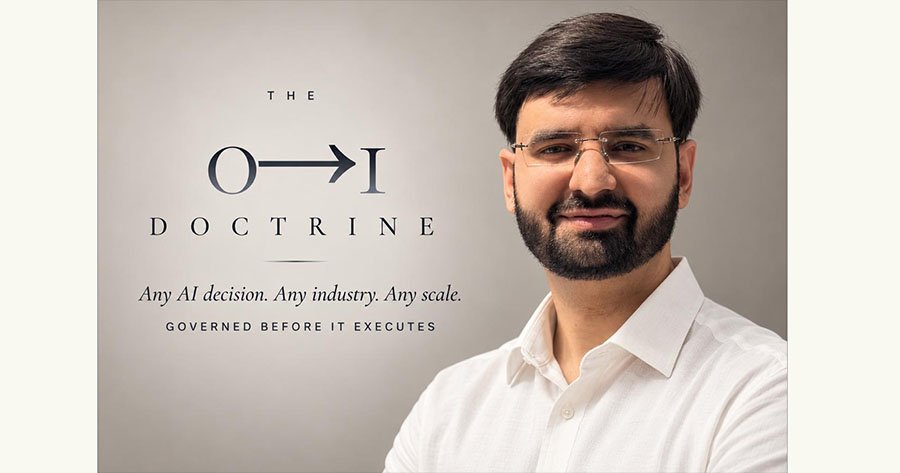
Two Arché Inventions share one yardstick that runs from 0, no fit with a need, to 1, the edge of ideal fit. The 0→1 Doctrine uses it to test each AI step before it runs. Band-Based Archive Triage (BBAT) applies it to the labels of lab records, deciding which to keep, promote or purge, each with a receipt. Either works alone or both together. This piece looks at failed experiments.
LIVE www.0to1doctrine.com
THE IDEA AT A GLANCE:
0→1 DOCTRINE
Checks each AI step pre-execution, against ranges people approve.
BBAT
Sorts lab records, ROT data included, by their labels.
RECEIPTS
Every decision leaves a record that others can read.
THE QUIET LOSS
Every lab learns from what goes wrong, yet failures are the records most likely to vanish. A failed run is jotted in a notebook, saved on a drive that is later replaced, left with a researcher who moves on, or never written down. Published science also leans towards successes, so the next team cannot see what was already tried.
WHY AI RAISES THE STAKES
AI can plan and run far more experiments than people, so it produces far more failures. If those are lost, the next AI or team may repeat the same dead end at speed. Automated labs are being built to feed each result into the next design, which makes the record part of the method.
ONE LANGUAGE FOR EVERY TEST
In the 0→1 Doctrine, each measurable limit, such as temperature, purity or cost, is designed to sit on a 0-to-1 scale built from that field’s own range. Humans approve the ranges, and legal rules stay separate required checks. A step can then be tested before it runs, in chemistry, medicine or materials.
WHEN A RUN GOES WRONG
During a run, the Orchestration and Compliance Token (OCT) watches for a limit being reached and, by design, pauses the task, reroutes it or calls a human. The Actuation Compliance Receipt (ACR) then records what was tested and what followed, so even a stopped run leaves a clear note of why.
EARLY WARNINGS ARE ADVICE
The Predictive Risk Advisory Token (PRAT) is designed to warn a lab before an experiment reaches a limit, and people decide whether the limit changes. EMERGE (Emergent Meta-Environmental Response and Governance Envelope) is designed to flag wider conditions, such as a shared supply running short. In BBAT, SPAR (Systemic Pattern Analysis from Receipts) is designed to flag patterns in sealed receipts, such as a burst of purges. Each advises for review; none acts alone.
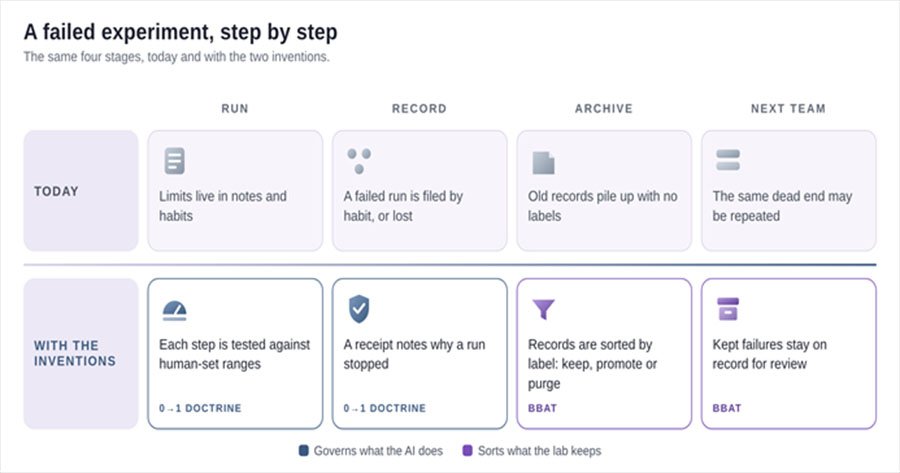
Figure 1. A failed experiment, today and with the two inventions, step by step.
THE ARCHIVE NOBODY OPENS
Behind every lab sits an archive of instrument logs, old notebooks, failed runs and files from retired equipment, new or old. Much of it is ROT data, meaning redundant, obsolete or trivial, and some sits on forgotten drives that nobody dares wipe. Keeping everything costs money and carries risk; deleting blindly loses lessons.
SORTING BY LABELS
BBAT is designed to route records by the labels they already carry, such as age, kind of result, purpose and any legal hold, without opening the files. Each record goes to keep, promote for use or purge. A failed run can carry a label that says what it is, so it is not filed away blindly.
A FAILURE WORTH KEEPING
Failed runs are not all alike. A broken instrument teaches little, while a true negative result can spare the next team repeated work. The label tells them apart. Humans set the rules for what each kind of record is worth, and BBAT applies those rules the same way each time.
THE COST OF REPEATING
A repeated experiment spends reagents, instrument time and weeks of effort, and an AI loop can repeat it faster than a person. Keeping a labelled failure may cost far less than running it again. The aim is not to keep everything, but to keep what teaches, and to show why the rest was dropped.
WHO DECIDES A PURGE
No record should vanish by habit. BBAT can leave a receipt for every purge, hold records under legal hold, and send a doubtful case to an authorised human reviewer through its Human Override Pathway. A purge then follows a rule and leaves a note. Humans set that rule, not the software.
LEARNING WITHOUT HANDING OVER FILES
Some records are worth sharing beyond the lab. BBAT can turn a group of them into one bounded band inside protected hardware. A minimum group size and band width are checked first, so a band stands for many records, not one. A partner can learn from the band while the files stay home.
ONE EXAMPLE: A CATALYST TEAM
Example, illustrative only: an AI agent tests 1,000 catalyst recipes. Figure 2 follows them from the first run to the final record.
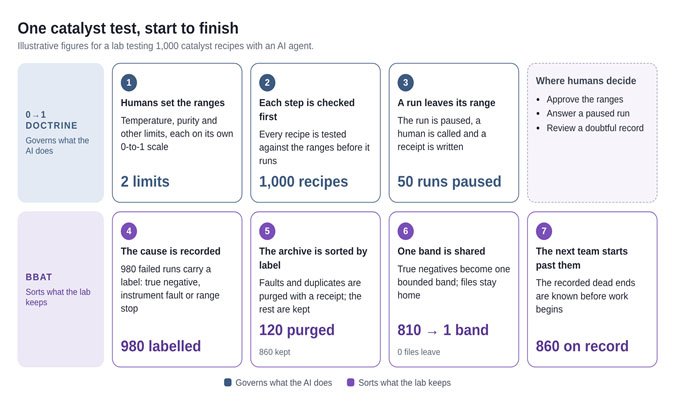
Figure 2. One catalyst test, with illustrative figures.
EITHER INVENTION, OR BOTH
A lab running many experiments may start with the Doctrine. A lab with years of stranded archives may begin with BBAT. Each stands alone. Together, one lab can show what its AI could do and what it chose to keep, so failures stay findable for the humans who review the work.
TOWARD A SUPERINTELLIGENT AGE
A superintelligent age is not here, and this article does not say these inventions will bring it nearer. If AI scientists do multiply, they could repeat science’s old habit of forgetting failure, only faster. Both inventions are designed to work with labelled records, keeping or purging them by rules humans set, so lessons stay findable.
READ THIS WITH CARE
Everything here describes what the filings are designed to do, not what any deployment has shown. A kept failure helps only if its cause is recorded, and a label is only as good as the human who sets it. Neither invention replaces the scientists, the journals or the review that judge the work.
QUICK ANSWERS
Do labs have to change their tools?
The Doctrine can connect through adapters, and BBAT reads labels without moving archives.
What if rules differ by country?
Jurisdiction is one of the labels BBAT reads, so each record can follow the rule of the place it came from.
How long is a failure kept?
Humans and law set the period for each type of record, and BBAT is designed to apply it.
Can experiments keep running at speed?
Steps inside the ranges are designed to carry on; people are asked when a limit is reached or a judgment is needed.
CLOSING NOTE
A lab’s wisdom is not only what it proved, but what it remembers failing. Let every dead end be labelled, kept with care, and found.
LIVE www.0to1doctrine.com
This can be tested, live, via API, governed against ungoverned, side by side.
THE INVENTOR
Systems theorist, inventor, and serial entrepreneur Vatsal Soin holds grants in the US, Japan, India and more; filings span six continents; latest grant, AI footwear, August 2026. Inventions: footwear, apparel fit, Sharable Size Cards, digital twins, robotics, global governed data, archive triage, quantum-resilient cryptography, AI governance. SIM–RMIT and NTU alumnus. Every prior invention was a step; 0→1 is the destination.
SELECTED REFERENCES
Granted: US Patent 12,446,652 B2 • Japan Patent 7560909 • India Patents 454081 and 599317. Filed: PCT/IN2025/051943 • US 19/489,595 • India 202511115781 • Australia AU2022450649 • India 202611113867 (23 September 2026) • PCT/IN2026/052042 (1 October 2026).
DISCLAIMER
Informational only. Not certified. No endorsement implied. Not investment advice. Examples are illustrative, not field results. Vatsal Soin • © 2026 All Rights Reserved.