CD Web Desk
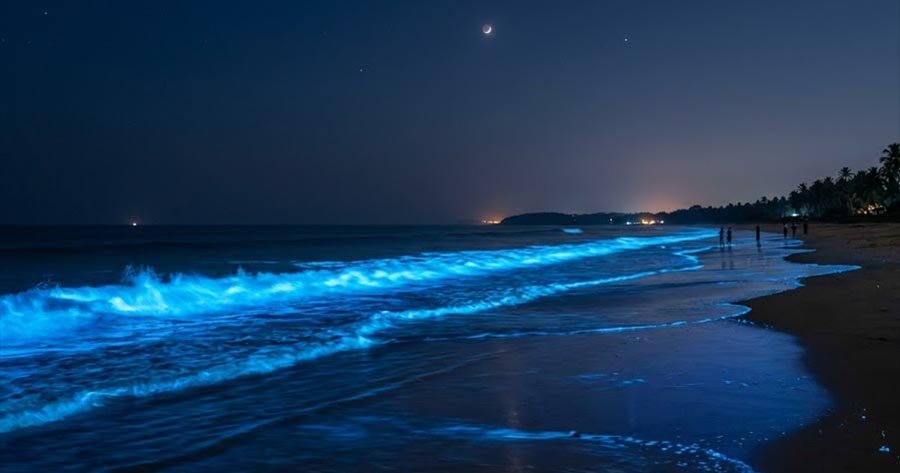
Mangaluru, Oct 31: The shoreline along the Mangaluru coast has turned into a spectacular natural light show, with waves emitting an unusual blue glow after dusk, drawing attention to a rare marine phenomenon known as bioluminescence.
The striking sight, reported at several beaches along the coast, occurs when tiny marine organisms emit light in response to movement or disturbance in the water. As waves break along the shore, the water appears to shimmer in shades of electric blue, creating an almost surreal spectacle against the darkness.
Contrary to possible concerns, the phenomenon is not necessarily an indication of chemical pollution. It is caused by the presence of Noctiluca scintillans, a microscopic marine organism belonging to the dinoflagellate group. Commonly associated with the phenomenon popularly known as ‘sea sparkle’, these organisms are capable of producing light through a natural biochemical reaction.
The blue illumination is generated when the light-emitting compound luciferin reacts with oxygen in the presence of the enzyme luciferase. Mechanical disturbance, such as waves crashing against the shore or water being stirred, can trigger the organisms to emit brief flashes of blue light.
Marine experts attribute the increased occurrence of such displays to favourable environmental conditions. The influx of nutrients into coastal waters following the monsoon can encourage the multiplication of microscopic marine organisms, sometimes resulting in large concentrations that produce the visible glow.
Although the phenomenon is visually captivating, its appearance and intensity depend on several factors, including the concentration of bioluminescent organisms, water conditions and the level of disturbance in the sea.
The glowing waves offer a fascinating glimpse into the natural processes of the marine ecosystem, transforming stretches of the Mangaluru coastline into a luminous spectacle after sunset.