CD Web Desk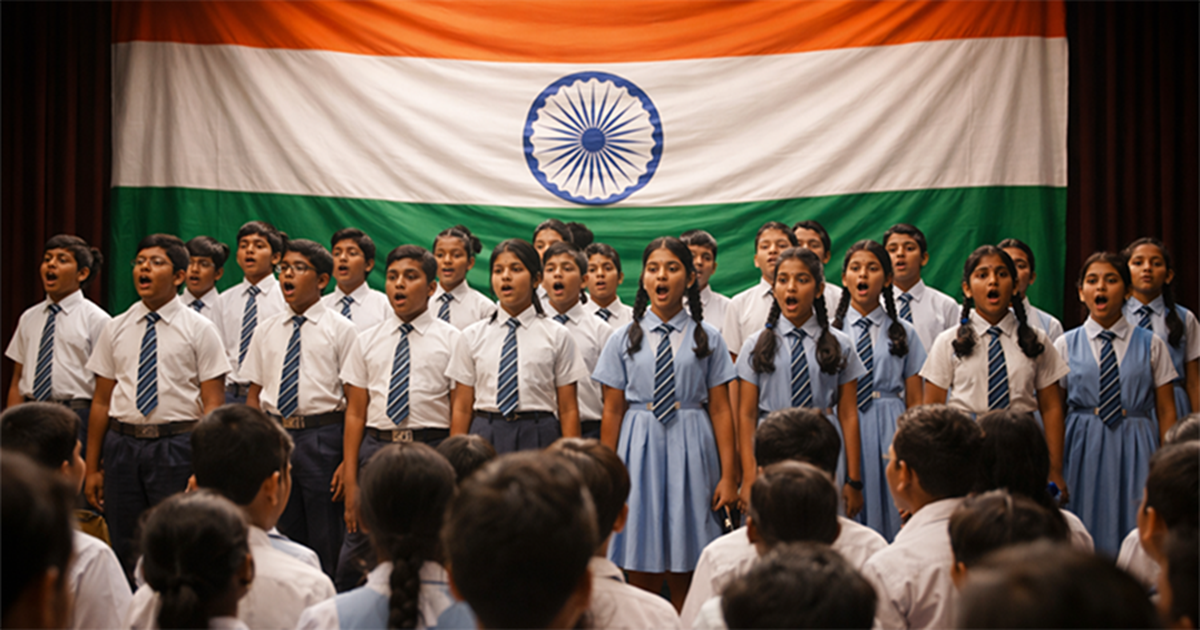
New guidelines issued by the Union Home Ministry on the National Song ‘Vande Mataram’ state that the audience must stand to attention whenever the official version of the song is sung or played.
According to the directive, when both the National Song and the National Anthem are rendered on an occasion, ‘Vande Mataram’ shall be sung first, followed by the National Anthem.
The ministry said the guidelines aim to ensure proper decorum and respect while rendering the National Song.
Significantly, the guidelines state that all six stanzas of ‘Vande Mataram’, written by Bankim Chandra Chatterjee, shall be sung. This includes four stanzas that were excluded from official renditions in 1937.
The National Song will also be played at civilian awards ceremonies, such as the Padma Awards, and at all events attended by the President, including during arrival and departure.
On all such occasions, the official version of ‘Vande Mataram’ shall be recited with mass singing, the ministry said.
The guidelines further instruct school authorities to make adequate provision in their programmes to popularise the singing of the National Song and the National Anthem, and to promote respect for the National Flag among students.
Controversy
The directive, particularly the inclusion of all six stanzas, is likely to spark debate. Some of the later stanzas contain references to Hindu deities—Durga, Lakshmi and Saraswati—which has historically been a point of contention, especially among communities with strict monotheistic beliefs.
Text of ‘Vande Mataram’ (All Six Stanzas)
Vande Mātaram.
Sujalāṃ suphalāṃ
Malaẏajaśītalām
Śasyaśyāmalāṃ
Mātaram.
Vande Mātaram.
Śubhra-jyotsnā-pulakita-yāminīm
Phullakusumita-drumadalaśobhinīm,
Suhāsinīṃ sumadhurabhāṣinīm
Sukhadāṃ varadāṃ Mātaram.
Vande Mātaram.
Saptakoṭīkanṭha-kala-kala-ninādakarāle
Dvisaptakoṭībhujaidhṛtakharakaravāle,
Avalā kena mā eta bale!
Vahuvaladhāriṇīṃ
Namāmi tāriṇīṃ
Ripudalavāriṇīṃ
Mātaram.
Vande Mātaram.
Tumi vidyā tumi dharmma
Tumi hṛdi tumi marmma
Tvaṃ hi prāṇāḥ śarīre.
Bāhute tumi mā śhakti,
Hṛdaẏe tumi mā bhakti,
Tomārai pratimā gaṛi mandire mandire.
Tvaṃ hi Durgā daśapraharaṇadhārinī
Kamalā kamala-dalavihāriṇī
Vānī vidyādāẏiṇī
Namāmi tvaṃ
Namāmi kamalām
Amalāṃ atulām,
Sujalāṃ suphalāṃ
Mātaram
Vande Mātaram.
Vande Mātaram
Śyāmalāṃ saralāṃ
Susmitāṃ bhūṣitām
Dharaṇīṃ bharanīm
Mātaram.
English Translation
Mother, I praise thee!
Rich with thy hurrying streams,
Bright with thy orchard gleams,
Cool with the winds of delight,
Dark fields waving, Mother of might,
Mother free.
Glory of moonlit dreams,
Over thy branches and lordly streams,
Clad in thy blossoming trees,
Mother, giver of ease,
Softly smiling, sweet of speech,
Mother, I bow at thy feet.
Who has said thou art weak in thy lands,
When seventy million hands flash swords,
And seventy million voices roar
Thy dreadful name from shore to shore?
Mighty with many strengths,
To thee I call, O Mother and Lord.
Thou art wisdom, thou art law,
Thou art heart, our soul, our breath,
Thou art love divine, the awe
That conquers fear and death.
Thine the strength that nerves the arm,
Thine the beauty, thine the charm;
Every image divine
In our temples is but thine.
Thou art Goddess Durga, armed with power,
Thou art Kamala (Lakshmi), lotus-throned,
Thou art Vani (Saraswati), bestower of wisdom,
Pure and peerless, O Mother mine.
Rich with thy hurrying streams,
Bright with thy orchard gleams,
Mother sweet, I bow to thee,
Mother great and free.