CD Web Desk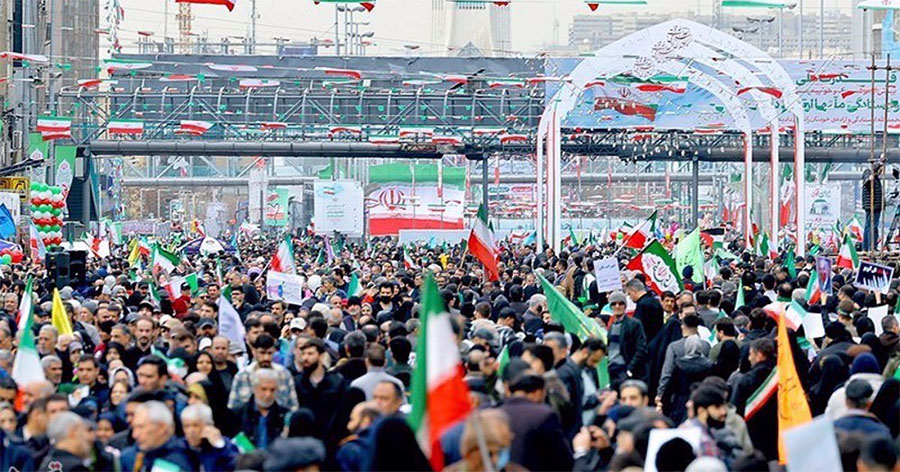
Millions of Iranians took part in nationwide rallies on Wednesday to mark the 47th anniversary of Iran’s Islamic Revolution, in what authorities described as a strong display of national unity and allegiance to the Revolution.
Crowds began gathering early in the morning along designated routes in Tehran and more than 1,000 cities and towns across the country, according to official announcements. Participants assembled from 9:30 a.m. local time and marched toward central gathering points, including Tehran’s Azadi Square.
Demonstrators chanted slogans condemning decades of crimes by the United States against the Iranian nation, as well as what they described as atrocities committed by the Israeli regime.
Families of martyrs were also seen among the crowds, carrying photographs of those who lost their lives during the eight-year Iran-Iraq war, the recent 12-day war, foreign-backed unrest, and other conflicts.
Organizers said marches were held at more than 1,400 locations nationwide. Official figures indicated that around 7,200 domestic journalists and nearly 200 foreign media representatives were covering the events.
On Tuesday night, ahead of the anniversary, people across the country chanted “Allahu Akbar” from rooftops and public spaces at 9:00 p.m. to commemorate the victory of the 1979 Revolution. In several cities, including Tehran, spontaneous gatherings carrying Iranian flags were reported.
In the days leading up to the rallies, government officials and institutions issued statements encouraging widespread participation, describing the events as a symbol of national resilience amid external pressure.
Authorities also referred to unrest earlier this year, saying foreign-backed armed groups had hijacked peaceful protests over economic grievances in January, resulting in widespread destruction of public and private property and the deaths and injuries of civilians and security personnel.
Iranian officials alleged the involvement of American and Israeli intelligence agencies in those incidents. According to a statement last month by Iran’s Foundation of Martyrs and Veterans Affairs, 3,117 people were killed during the unrest, including civilians and members of the security forces.
On Monday, Leader of the Islamic Revolution Ayatollah Seyyed Ali Khamenei called on Iranians to demonstrate unity and steadfastness on the anniversary, saying such solidarity would frustrate the country’s enemies.
The rallies mark the overthrow of the US-backed Pahlavi monarchy in 1979. Imam Ruhollah Khomeini returned from exile on February 1, 1979, receiving a massive public welcome following the shah’s departure weeks earlier. The Revolution was sealed on February 11, when the military declared neutrality and aligned with revolutionary forces.
On the sidelines of the Tehran march, damaged vehicles allegedly destroyed during the recent unrest were put on display. Officials said the vehicles had been vandalised and set ablaze by rioters.
Some participants carried copies of the Holy Quran and chanted slogans condemning an alleged insult to the Quran during the January incidents, reportedly carried out by foreign-trained operatives.
Several cruise missiles — including Soumar, Noor and Qadir — and ballistic missiles such as Zolfaghar, Haj Qassem and Emad were exhibited in Azadi Square. Wreckage of Israeli drones reportedly shot down during the recent 12-day conflict was also displayed.
President Masoud Pezeshkian attended the Tehran rally and was scheduled to address participants later in the day.
In a final resolution, marchers said their participation reflected the Iranian nation’s political awareness, national cohesion and vigilance in the face of mounting pressure and what they described as a comprehensive hybrid war led by the United States, Israel and their allies.
The statement stressed the need to preserve unity, strengthen social solidarity and avoid division, describing national cohesion and the bond between the people and the Islamic system as Iran’s most important source of strength against internal and external threats.