CD Web Desk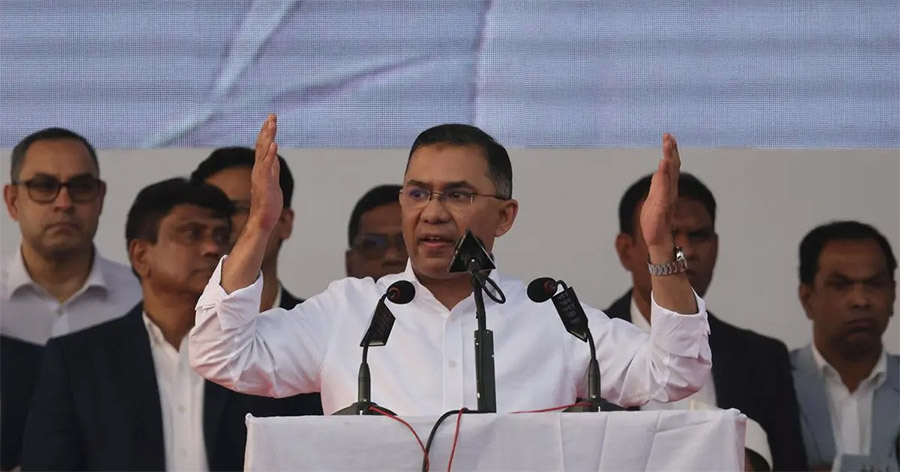
Bangladesh appears poised for a landmark political transition, with the Bangladesh Nationalist Party (BNP) led by Tarique Rahman heading toward a decisive victory in the 2026 parliamentary elections. If confirmed, Rahman will become the country’s first male prime minister in 35 years, marking the end of an era dominated by female leadership.
Rather than organising victory celebrations, the BNP has urged supporters to offer nationwide prayers, signalling a measured return to power nearly two decades after former prime minister Khaleda Zia left office in 2006.
Commanding Lead Across the Country
Preliminary results show the BNP leading in a substantial majority of constituencies. Voting was conducted in 299 seats, while polling in one constituency was cancelled following the death of a candidate.
More than 127 million voters were eligible to participate in the election in the country of around 170 million people. Nearly 2,000 candidates contested the polls, making it one of the most competitive national elections in Bangladesh’s history. Notably, for the first time, expatriate Bangladeshis were able to cast their ballots through a postal voting system.
Bangladesh Jamaat-e-Islami, which led a broad opposition alliance, conceded defeat. However, one of its allies has alleged irregularities and called for an audit before the final declaration of results.
A New Political Chapter
The election marks the first national vote since the July 2024 uprising that forced long-time prime minister Sheikh Hasina from office after 15 years in power. Her party, the Awami League, did not participate in the contest, dramatically altering the country’s political landscape.
For decades, Bangladeshi politics revolved around two powerful figures — Hasina and Zia — often described as the “Battle of Begums.” With Zia’s passing in December and Hasina currently in exile, that chapter appears to have closed.
Rahman, Zia’s son, returned to Bangladesh after 17 years abroad to spearhead the BNP’s campaign, galvanising party cadres and consolidating voter support.
Opposition Realignment
With the BNP poised to form the next government, Jamaat-e-Islami is expected to emerge as a key opposition force. Political observers say the shifting alignment could significantly influence domestic governance, economic policy and foreign relations.
The transition comes at a sensitive moment, as Bangladesh seeks stability following years of political turbulence and economic strain.
As the nation awaits the final official results, all indications suggest that Bangladesh is entering a new phase in its political history — one that may redefine leadership dynamics after decades shaped by dynastic rivalry.