CD Web Desk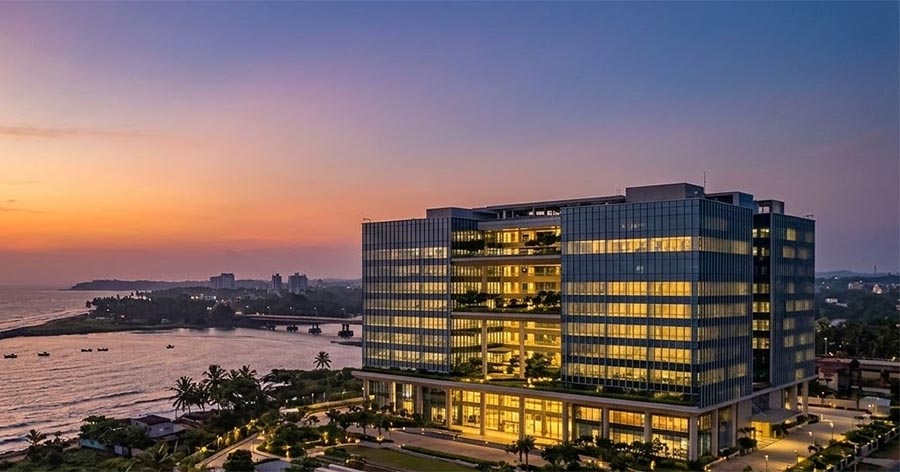
Mangaluru: The proposed ₹135-crore IT Park in Mangaluru, one of Karnataka government’s flagship projects under its “Beyond Bengaluru” initiative, is facing major hurdles after failing to attract private developers in the first round of bidding.
The project, being developed by the Karnataka State Electronics Development Corporation Limited (KEONICS), is planned on a 3.28-acre site at Derebail along Blueberry Hills Road near NH-66. Envisioned as a modern technology hub for the coastal region, the IT Park is expected to generate nearly 11,000 jobs once operational.
However, despite the project’s scale and strategic importance, the first tender process — floated on December 15 last year — ended without receiving a single bid. The government has now reopened the bidding process, with the second round scheduled to close on May 22, 2026. Industry sources said only one bidder has shown interest so far.
Concerns over infrastructure and commercial viability
Real estate and industry stakeholders say the lack of participation is not due to absence of demand for IT growth in Mangaluru, but because of practical concerns surrounding infrastructure and financial viability.
According to local developers, the proposed site still lacks basic supporting infrastructure despite being earmarked for IT development nearly two decades ago. The area does not yet have dedicated high-capacity road connectivity capable of supporting a large-scale tech campus expected to accommodate thousands of employees.
Developers are reportedly reluctant to invest heavily in a project where key civic infrastructure remains incomplete.
Industry representatives have also expressed reservations over the lease rentals and financial terms proposed in the tender document. Developers argue that commercial benchmarks appear to mirror those of Bengaluru and other Tier-1 cities, making the project financially unattractive in a Tier-2 market like Mangaluru.
Some stakeholders believe the government should initially offer more competitive lease rates and incentives to help establish a sustainable IT ecosystem in the region.
Tender conditions seen as restrictive
Sources in the industry further said that the original Request for Proposal (RFP) included technical conditions that were too restrictive for local developers, while also failing to attract major national players.
Although certain relaxations were reportedly introduced in the second round following discussions with industry bodies, developers continue to view several contractual and financial conditions as rigid.
The project is proposed under the Design-Build-Finance-Operate-Transfer (DBFOT) model with a 30-year lease period and an option for extension based on performance. Around 75 per cent of the built-up area is planned for commercial and IT workspace, while the remaining portion has been allocated for retail, hospitality and allied facilities.
Strong IT base, but weak investor confidence
Despite the current setbacks, Mangaluru is considered to have a strong foundation for IT sector growth. The undivided Dakshina Kannada region already hosts more than 250 IT firms employing over 18,000 professionals. The presence of engineering institutions across the coastal belt also ensures a steady pool of skilled graduates.
However, much of the city’s IT growth so far has been driven by private initiatives operating from managed office spaces and independent campuses, rather than large state-backed infrastructure projects.
Industry observers say delays in execution and repeated revisions to earlier project plans have weakened investor confidence over the years.
Suggestions to revive the project
Stakeholders have suggested several measures to revive developer interest and prevent another failed tender round.
Among the key recommendations are immediate development of road connectivity and utility infrastructure around the Derebail site, revision of lease pricing to better reflect local market realities, and extending lease tenure certainty to improve long-term financial planning for investors.
Some industry representatives have also called for a longer lease structure, similar to the 60-year tenure proposed during earlier consultation stages, arguing that it would make the project more attractive to institutional developers.