CD Web Desk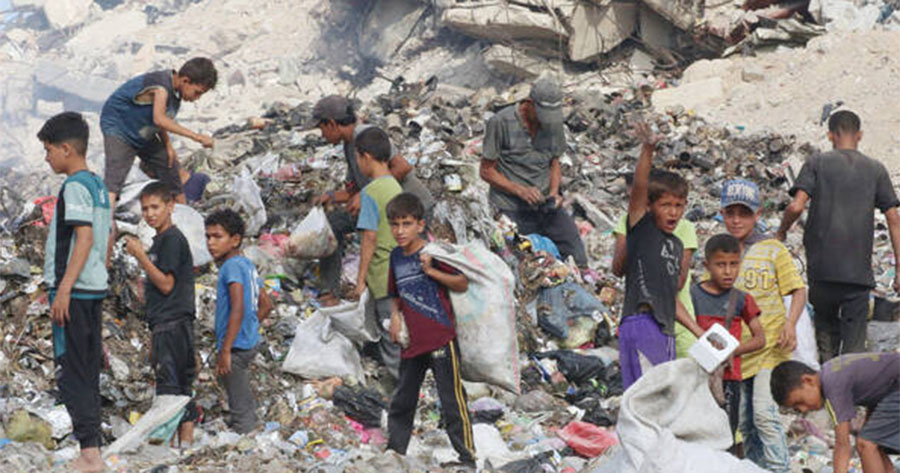
For Gaza’s battered population, survival is no longer only about escaping airstrikes and shelling. After months of relentless Israeli military operations that have shattered much of the enclave’s infrastructure, Palestinians are now confronting a growing public health disaster fueled by sewage, contaminated water, mounting garbage and overcrowded displacement camps.
Aid agencies warn that disease is spreading rapidly across the territory as living conditions deteriorate to alarming levels.
According to the UN Relief and Works Agency (UNRWA), more than 125,000 cases of skin diseases linked to rats, parasites and poor sanitation were recorded between January and May this year. Health workers say the collapse of water and sewage systems has created ideal conditions for outbreaks.
Nearly all of Gaza’s water and sanitation infrastructure has been damaged or destroyed during the war, according to the World Health Organization (WHO). Around 80 percent of the population now depends on trucked drinking water, while many displaced families live in makeshift tents surrounded by waste and stagnant sewage.
With summer temperatures soaring above 34°C, thousands of Palestinians have sought relief in polluted seawater, exposing themselves to further health risks.
“The destruction of basic infrastructure has turned daily life into a health hazard,” said Prue Coakley, Gaza emergency coordinator for Médecins Sans Frontières (MSF).
She said sewage networks, electricity systems and water infrastructure have been devastated, leaving wastewater flowing through streets and displacement camps.
“When it rains, sewage floods through people’s tents,” she said.
The consequences are increasingly visible. WHO data shows more than 153,000 cases of acute watery diarrhea were reported between January and early May alone. Children have been among the worst affected, accounting for nearly half of reported cases.
Respiratory illnesses, hepatitis A, skin infections, scabies and other parasitic diseases are also spreading through overcrowded shelters where families have little access to clean water or proper hygiene facilities.
Children remain particularly vulnerable. Aid agencies report high levels of illness and growing concerns that repeated infections could worsen malnutrition among already weakened children.
Repeated displacement has deepened the crisis. Many families have been forced to flee multiple times as Israeli military operations expanded across different parts of Gaza. According to MSF, some Palestinians have been displaced as many as 15 or 16 times since the war began.
Each displacement strips families of belongings, income and access to basic necessities.
“The more people move, the more they lose,” Coakley said. “Their ability to wash, clean clothes and maintain basic hygiene is severely affected.”
Health workers say outbreaks of scabies and lice have become common among children living in crowded camps. Even when treatment is available, reinfection is often inevitable because families must return to the same unsanitary conditions.
The situation is expected to worsen as summer intensifies. WHO testing found that nearly three-quarters of water samples collected across Gaza failed to meet safety standards, with some contaminated by fecal bacteria.
Aid agencies continue to provide emergency water, sanitation and waste-management services wherever possible. However, severe shortages of fuel, medicines and medical supplies are limiting their ability to respond.
Fuel shortages are affecting hospitals, ambulances, laboratories, water production facilities and wastewater treatment plants. At the same time, a lack of laboratory equipment is hampering efforts to detect outbreaks before they spread.
Aid workers warn that without immediate improvements in access to fuel, clean water and sanitation services, Gaza could face an even larger public health emergency.
For Gaza’s 2.1 million residents, the crisis has become a grim struggle for dignity and survival. Beyond the destruction of homes, roads and hospitals, the collapse of basic services has left families battling disease, contaminated water and unbearable living conditions, turning everyday life into a fight for health as well as safety.