CD Web Desk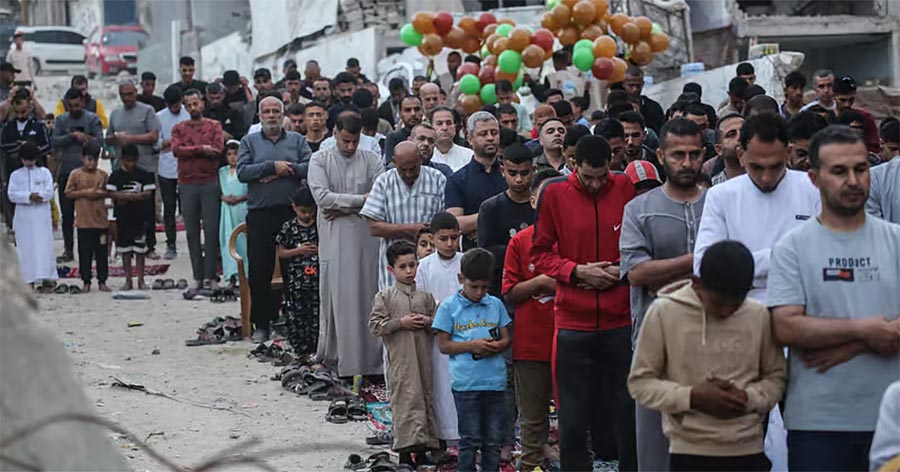
Gaza: What is usually a festival of joy and family celebration has turned into another day of hardship for Palestinians in Gaza, where war damage, shortages, and soaring prices have stripped Eid of its traditional spirit.
New clothes for children, sacrificial sheep, and Eid sweets—central to the celebration—are largely unaffordable or unavailable. Many families say they can only look at market stalls without being able to buy anything.
“I go to the market only to look around because I cannot afford to buy anything. Whenever I ask about prices, I return heartbroken,” said Gaza resident Nadia Abu Shamala, displaced from northern Gaza and now living in Deir al-Balah.
She said Eid no longer carries any joy. “This year, Eid comes with none of the happiness we once knew because of the war, soaring prices, and our inability to provide even the simplest needs for our children.”
Despite a US-brokered ceasefire announced in October 2025, Israeli strikes continue in Gaza, where most infrastructure has been heavily damaged and the majority of the population depends on aid, according to the United Nations. Israel maintains tight control over all entry points, and aid inflows remain insufficient to ease shortages or reduce prices, humanitarian groups say.
Even traditional Eid sacrifices have become out of reach for most families. Sheep, central to Eid al-Adha rituals, are now scarce and extremely expensive. Gaza’s livestock population has collapsed due to restrictions and war damage, with only a fraction remaining, according to UN food agencies.
“The truce is a big lie, but we are still trying to bring some joy to the children,” said Abu Abdullah al-Mosadar, who pooled savings with his brother to buy a sheep costing around 13,000 shekels—an amount beyond the reach of most families.
Before the war, the same animal cost nearly a tenth of today’s price. “We have never seen such prices in our lives,” said Gaza City resident Ahmed Abu Salem. “Families like ours cannot even afford a kilogram of meat anymore.”
Cooking Eid sweets has also become difficult due to severe fuel shortages. Gas is largely unavailable, forcing families to abandon home baking. “We used to make kaak and maamoul at home, but now prices are too high and there is no cooking gas,” said displaced resident Abu Ahmed Wafi in southern Gaza.
In Khan Yunis, some families tried to preserve a sense of tradition, preparing Eid biscuits in makeshift shelters and clay ovens, using whatever materials they could find.
From her tent in Deir al-Balah, Nadia Abu Shamala summed up the mood of many:
“We are still living in tents, with no joy—only fear, exhaustion, and hardship. Nothing of the happiness we once knew remains.”