CD Web Desk
Beirut/London: As Lebanese and Israeli officials meet in Rome this week in a fresh attempt to resolve decades-old border disputes and negotiate Israel’s withdrawal from southern Lebanon, events on the ground are moving in the opposite direction.
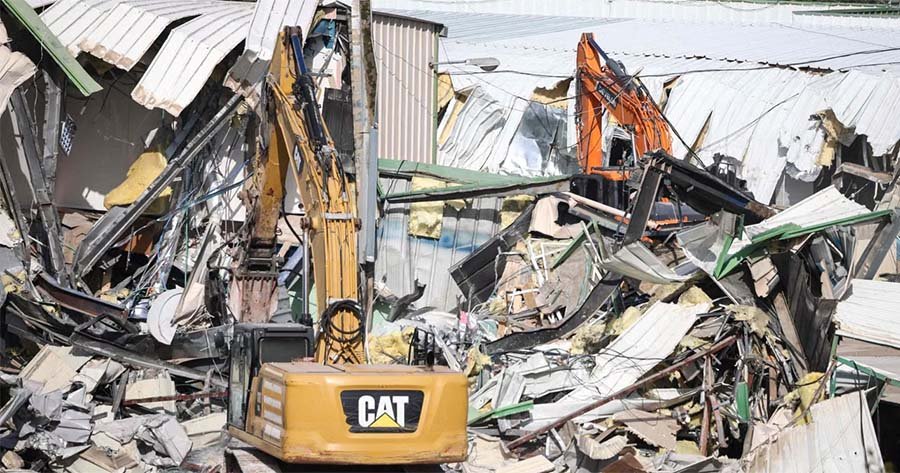
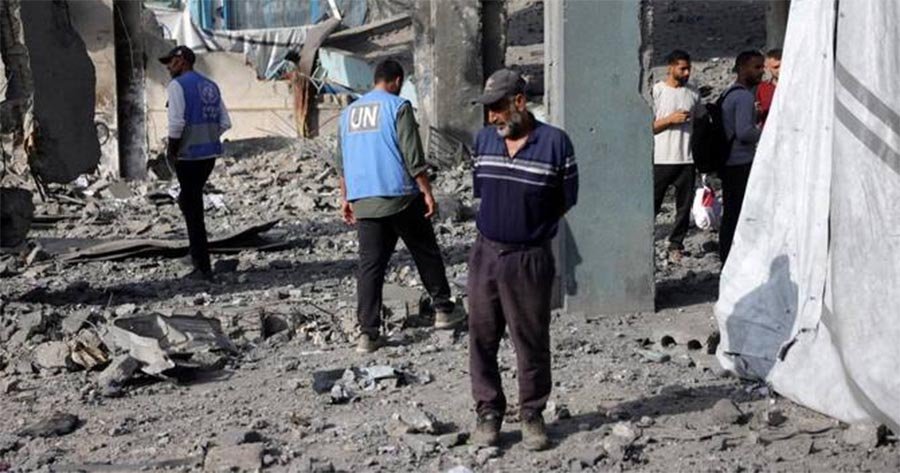
Nearly two years after a ceasefire agreement ended large-scale fighting, Israeli forces continue to destroy homes, farmland and public infrastructure in occupied Lebanese territory, fueling fears that the destruction is intended not simply to eliminate Hezbollah positions but to permanently prevent residents from returning.
“Whatever the legal status of the zone, and whatever any agreement says about withdrawal, what exists on the ground is a belt of territory people cannot live in,” Ahmad Baydoun, an open-source investigator and doctoral candidate at Delft University of Technology in the Netherlands, who is researching the use of white phosphorus weapons in urban conflict, told Arab News.
“That does not reverse itself when the shooting stops.”
For many displaced Lebanese, the concern is no longer whether Israel will eventually withdraw, but whether there will be anything left to return to.
Kim Ghattas, a Financial Times columnist and author of “Black Wave,” a book about relations between Saudi Arabia and post-revolution Iran, recently described the destruction in southern Lebanon as “incredible devastation … that is not receiving enough attention.”
Speaking to GZero Media’s Ian Bremmer, Ghattas said Israeli forces were not only using artillery and airstrikes but also carrying out systematic controlled demolitions.
“They plant explosives and blow up entire villages,” she said. “Their argument is that this is to destroy Hezbollah infrastructure. But in reality they’re turning southern Lebanon into an uninhabitable buffer zone.”
Rather than being documented by Lebanese authorities, much of the evidence has emerged through Israeli military footage and commercial satellite imagery that shows neighborhoods flattened, agricultural land bulldozed and entire villages erased.
The Israeli defense minister, Israel Katz, recently said the country’s military had destroyed 24 Lebanese villages, arguing they had had all served as Hezbollah strongholds.
Unable to access their homes, some displaced residents have pooled their money to buy updated commercial satellite imagery simply to see what remains of their villages.
“We no longer know what is left except through photographs,” said Tarek Mazraani, who heads an association representing the residents of border communities in Lebanon.
“What is happening is not ordinary wartime destruction; it is an attempt to erase our villages, our history and our connection to the land, making any return to normal life impossible.”
According to Lebanese estimates, Israel’s military presence has expanded from an area of about 590 square kilometers immediately after the ceasefire to about 650 square kilometers now, reinforcing concerns in Beirut that a temporary security zone is gradually becoming a more permanent fixture.
Civilian access to border areas remains tightly controlled. Only UN Interim Force in Lebanon patrols and limited humanitarian convoys regularly reach a handful of Christian border villages, including Rmeish, Ain Ebel and Debel. Anyone else seeking access must obtain Israeli authorization in advance through a US-Lebanese-Israeli coordination mechanism by submitting personal information, photographs and details of their vehicles.
Lebanese officials acknowledge that they are unable to fully assess the scale of the destruction because many affected areas remain inaccessible. Government agencies have prepared plans to survey the damage, clear debris, repair roads and restore services, but such efforts cannot begin in territory still controlled by Israeli forces.
A Lebanese military source told Arab News that continuing demolitions undermine the implementation of a US-brokered framework agreement and the pilot security zones established under the ceasefire agreement.
“All the Israeli violations indicate that Israel does not want residents to return to their villages,” the source said.
The Lebanese president, Joseph Aoun, and prime minister, Nawaf Salam, have sought to halt the demolitions through a ceasefire-monitoring mechanism and diplomatic channels, but the Israeli operations have continued.
The latest conflict began when Hezbollah launched cross-border attacks against Israel on Oct. 8, 2023, in support of Gaza, before escalating into a broader confrontation when the US-Israel war with Iran began in February this year.
More than 1.2 million people were displaced before Israeli forces advanced beyond the so-called Yellow Line, a 4-to-10 kilometer buffer zone in Lebanese territory imposed by Israel. Israeli troops later crossed the Litani River, seized Beaufort Castle and pushed toward the strategic Ali Al-Taher hills overlooking much of southern Lebanon.
Preliminary estimates suggest that almost 68,000 housing units in Lebanon have been destroyed or rendered uninhabitable, and several villages have effectively disappeared beneath the rubble.
Although many residents have returned to areas outside the Israeli-controlled zone, normal life has not. Homes, businesses and farmland remain devastated. Reconstruction has barely begun, public services are limited and recurring Israeli strikes and surveillance flights continue to discourage investment and rebuilding.
Agriculture, the economic backbone of many border communities, has been severely disrupted. Small businesses have struggled to reopen. Many families exhausted their savings during displacement and now rely on remittances or the sale of personal possessions to survive.
A recent study by the Arab Center for Research and Policy Studies titled “The Suspended Return” concluded that the physical return of some residents has not translated into genuine recovery. While electricity and water supplies have been partially restored to some villages, employment remains scarce, commercial activity weak and healthcare inconsistent.
For many residents, the greatest fear is no longer another war, it is that the continuing demolitions, combined with the absence of any reconstruction activity and the gradual expansion of Israeli-controlled territory, will turn temporary displacement into permanent exile.
The negotiations in Rome between Lebanese and Israeli officials are intended to resolve the border dispute and facilitate an Israeli withdrawal.
But with villages continuing to disappear beneath bulldozers, many Lebanese fear diplomacy might ultimately formalize a new reality that is already being shaped on the ground — one in which an entire strip of southern Lebanon becomes a territory in which people can no longer live.