CD Web Desk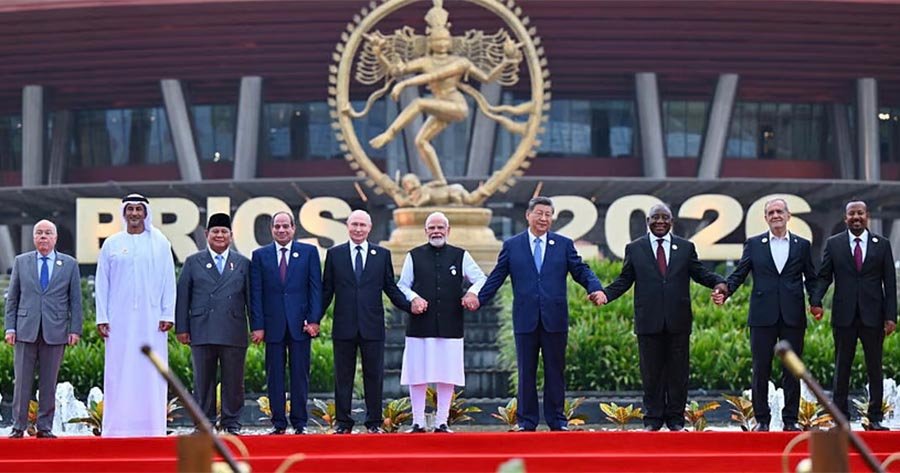
New Delhi: The BRICS on Saturday called for “maximum restraint” to prevent further escalation in West Asia, expressed serious concern over attacks on civilian infrastructure and peaceful nuclear facilities, and stressed respect for the sovereignty and territorial integrity of states.
The position came as the bloc adopted the New Delhi Declaration at its 18th summit in the Indian capital, despite differences among members over the ongoing conflict involving Israel, Iran and the United States.
The declaration expressed “serious concern” over “deliberate attacks” on civilian infrastructure and peaceful nuclear facilities operating under the full safeguards of the International Atomic Energy Agency (IAEA). The reference amounted to a clear rebuke of the US and Israeli strikes on Iran’s nuclear facilities at Natanz, Fordow and Isfahan.
The BRICS declaration noted that such attacks violated international law and relevant IAEA resolutions, stressing that “nuclear safeguards, safety, and security must always be upheld, including in armed conflicts, to protect people and the environment from harm.”
The bloc also expressed deep concern over the continued escalation of tensions in West Asia and called on all sides to exercise maximum restraint and avoid actions that could further aggravate the situation.
It stressed the protection of civilians and civilian infrastructure in accordance with the UN Charter, while reaffirming the principles of sovereignty and territorial integrity.
“We encourage increasing efforts, through dialogue and diplomacy, towards a long-term understanding that will contribute to lasting peace, security and stability in the region,” the declaration said. It also stressed the importance of maintaining the flow of global trade, supply chains and energy in accordance with international law.
Prime Minister Narendra Modi, who hosted the summit, announced the adoption of the New Delhi Declaration after the first day’s deliberations at Bharat Mandapam.
“The New Delhi Declaration adopted today provides a clear direction for our shared resolve. It is now our responsibility to translate these resolutions into tangible results,” Modi told the participating leaders.
The summit was attended by Iranian President Masoud Pezeshkian, Russian President Vladimir Putin and Chinese President Xi Jinping, among other leaders.
The declaration also expressed concern over ongoing conflicts in different parts of the world and the growing polarisation and fragmentation of the international order. Without directly naming the Ukraine conflict, BRICS warned of the increasing risks of nuclear confrontation and conflict.
The bloc called for the early implementation of UN resolutions aimed at establishing a zone free of nuclear weapons and other weapons of mass destruction in West Asia.
Differences over West Asia
Reaching consensus on the declaration had been uncertain because of differences among BRICS members, particularly Iran, Saudi Arabia and the United Arab Emirates.
At a meeting of senior BRICS diplomats in New Delhi in May, Iran had pushed for a strong condemnation of the Israeli and US attacks on its territory. Saudi Arabia and the UAE, meanwhile, sought condemnation of Iran’s retaliatory strikes targeting US military assets in the region.
The differences had previously prevented the adoption of a joint outcome document, forcing India to issue a chair’s statement. Positions remained divided at a subsequent BRICS foreign ministers’ meeting in New Delhi, where Tehran and Abu Dhabi openly clashed over the conflict.
India subsequently worked with Russia and Egypt through diplomatic channels to bridge the differences between Iran and the Gulf states and enable the adoption of the joint declaration.
BRICS backs Palestinian rights
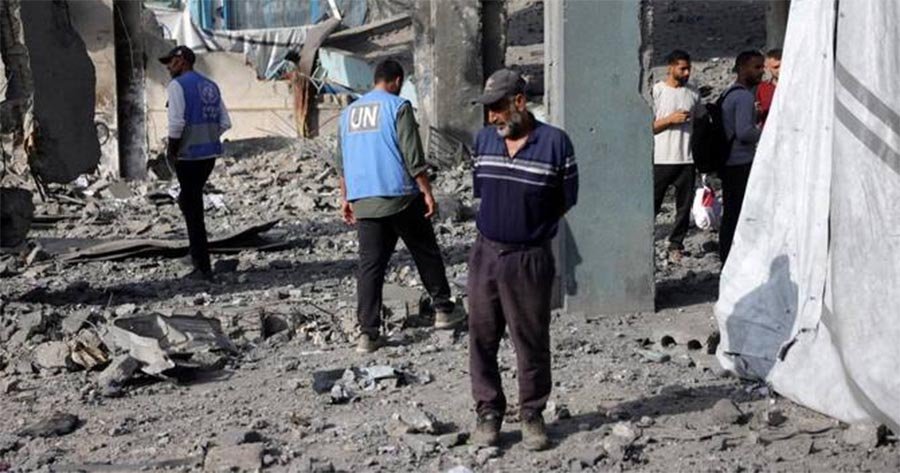
On Palestine, BRICS called for an end to the “illegal occupation” and opposed the forced displacement of Palestinians and demographic changes in Gaza.
The bloc also condemned attacks on civilians and civilian infrastructure, including healthcare facilities, and referred to proceedings before the International Court of Justice (ICJ) concerning Israel.
The declaration highlighted the ICJ’s provisional measures reaffirming Israel’s legal obligation to ensure the provision of humanitarian aid to Gaza.
BRICS further reaffirmed its support for Palestinian rights and statehood, backing a two-state solution based on the 1967 borders. It also rejected unilateral measures aimed at changing the legal and historical status of occupied Jerusalem.