
 CD Web Desk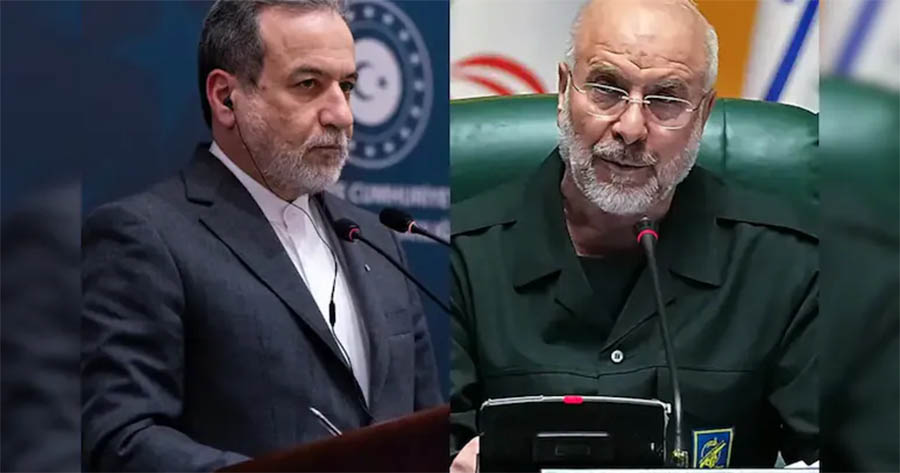
Washington: The United States reportedly urged its Middle East allies to warn Iran about an alleged Israeli plan to assassinate senior Iranian negotiators Mohammad Bagher Ghalibaf and Abbas Araghchi during sensitive ceasefire negotiations, according to a report by The New York Times.
The report said Washington feared that the killing of Iran’s foreign minister and parliament speaker could derail diplomatic efforts aimed at reducing tensions and trigger another round of conflict in the Gulf region.
The plot came amid Israel’s broader military campaign against Iran, during which numerous senior Iranian political, military and security officials were killed in targeted strikes. Iranian leaders have repeatedly accused Israel of pursuing a strategy of decapitating the country’s leadership through assassinations.
According to the report, US officials believed Ghalibaf and Araghchi could be at risk at a time when negotiations were underway to establish a framework for further talks, including discussions related to the Strait of Hormuz and Iran’s nuclear programme. Washington reportedly sought to prevent any action that could collapse the diplomatic process.
Earlier, The Wall Street Journal had reported that both Iranian officials appeared on an Israeli target list, but that Israel temporarily held back after objections from the United States following the resumption of truce talks.
The New York Times also reported that Ghalibaf narrowly escaped death on more than one occasion. During one Israeli strike targeting a secret meeting of senior Iranian officials in an underground bunker, he was reportedly rescued from the rubble, according to three senior Iranian officials cited by the newspaper.
Iranian authorities adopted extensive security measures to protect their negotiating team throughout the talks. When Ghalibaf and Araghchi travelled to Pakistan for discussions with US Vice President JD Vance, Tehran reportedly sought assurances through Pakistani and Qatari intermediaries that Israel would not target the delegation.
Pakistan responded by providing fighter-jet escorts for the Iranian aircraft carrying more than 70 delegates between the Iranian border and Islamabad. However, on the return journey, the delegation reportedly faced a security threat believed to be linked to Israel.
Mahdi Mohammadi, a senior adviser accompanying the delegation, later said the aircraft made an emergency landing in Mashhad, after which the delegation travelled nearly eight hours by road to reach Tehran as a precaution.
Despite the reported threats, both officials continued their diplomatic engagements. They later travelled to Qatar and Switzerland for further negotiations with American representatives and also participated in other international meetings, including the BRICS Foreign Ministers’ gathering in India.
The report highlights apparent differences between Washington and Tel Aviv over the direction of the conflict. While the United States was reportedly focused on preserving negotiations and preventing a wider regional war, Israeli actions were viewed by American officials as carrying the risk of undermining diplomatic efforts.
Israel’s military campaign against Iran has drawn widespread international scrutiny over its extensive use of targeted assassinations and strikes that have resulted in heavy civilian casualties and widespread destruction. Critics argue that such actions have deepened instability in the region and complicated efforts to achieve a lasting diplomatic solution.




Interesting that a plot like this was foiled. I wonder what security measures were in place to prevent it.