CD Web Desk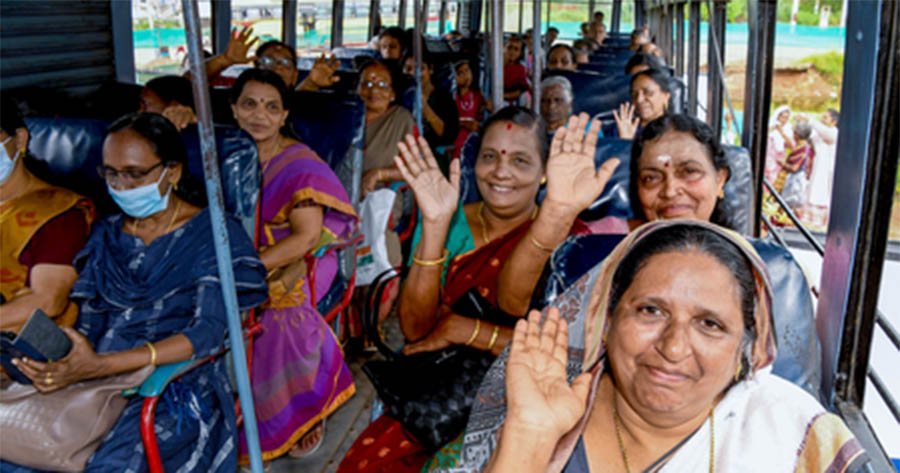
Mangaluru: A month after the Kerala government launched the Priyadarshini scheme offering free bus travel for all women, including those from Karnataka, private bus operators in Dakshina Kannada say they are witnessing a significant decline in passengers and revenue on cross-border routes.
Operators serving the Talapady and Kinya corridors said women commuters are increasingly opting for Kerala state-run buses, while Karnataka’s existing free travel scheme for women on KSRTC buses has further reduced ridership on several local routes.
Likhith Kumar, a private bus operator, said daily collections have dropped by Rs 1,500 to Rs 2,000 since the scheme came into effect.
“At bus stops where we earlier picked up around 10 passengers, we now get only three or four,” he said.
He added that operators on the Talapady route also have to bear monthly toll expenses, making it even more difficult to sustain operations amid falling revenues.
Dakshina Kannada Bus Operators’ Association (DKBOA) Joint Secretary Rajesh T said the impact has been most pronounced at Talapady, Beeri and KC Road.
“Earlier, students travelling in Kerala private buses would switch to our buses at Talapady. Now they continue their journey using free bus passes, and we have lost that segment of passengers as well,” he said.
DKBOA President Azeez Parthipady said operators on both the Talapady and Kinya routes are incurring losses of nearly Rs 30,000 per month.
“Despite the reopening of schools and colleges, passenger numbers have not recovered,” he said.
He noted that private buses operating towards Konaje, Manjanady and Kinya are also affected because women commuters can travel free on KSRTC buses within Karnataka under the state’s Shakti scheme.
Clarifying that the association is not opposed to welfare initiatives, Parthipady said it would soon submit a memorandum to the Karnataka government seeking financial support for private operators.
“If the government reimburses KSRTC for such welfare schemes, private operators should also receive similar support. Otherwise, it creates an uneven playing field,” he said.
Parthipady warned that continued financial losses could force private operators to shut down services, eventually leaving KSRTC as the sole operator on many routes.
“Healthy competition benefits passengers by ensuring better services. If private buses disappear, commuters could be left with fewer transport options,” he said.
The association plans to formally urge the Karnataka government to extend reimbursement or other support measures to private operators, arguing that such assistance is essential to ensure their long-term viability while maintaining balanced public transport services.