CD Web Desk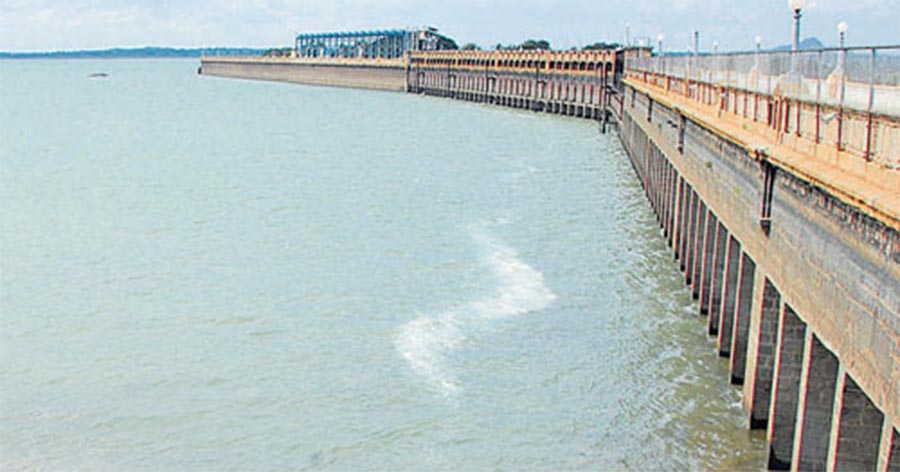
Bengaluru: Water storage in Karnataka’s major reservoirs, particularly in the Cauvery basin, has begun to decline, raising concerns over water security ahead of the summer months.
After touching nearly 100% capacity in November, storage levels have now fallen to around 60%. Data from the Karnataka State Natural Disaster Management Centre (KSNDMC) indicates that the four key Cauvery basin reservoirs currently hold less than 70% of their total capacity.
Among them, Harangi stands at 45% of its storage capacity, Hemavathi at 57%, while Kabini and Krishna Raja Sagara (KRS)—a crucial source for Bengaluru—are both at 78%. The combined storage capacity of the four reservoirs—KRS, Harangi, Hemavathi and Kabini—is 114.57 TMC, of which 78.34 TMC is presently available.
Experts warn that water levels are likely to decline further in the coming weeks. However, they note that careful and judicious use of available water can help avert a summer shortage.
Dr G.S. Srinivas Reddy, former director of KSNDMC, said that significant inflows to reservoirs are expected only during the monsoon months of June and July. “Intermittent rain spells until then will have little impact on storage levels. Hence, efficient water management is crucial. The Cauvery basin reservoirs will require at least 16 TMC over the next four months to meet drinking water needs of major cities and 625 villages, of which Bengaluru alone will need about 8 TMC,” he said.
Experts also attribute the declining levels to rising temperatures and increased evaporation. With temperatures currently ranging between 32°C and 35°C, evaporation losses over the next four months are expected to be substantial.
“A reservoir can lose up to 6 mm of water daily due to evaporation. With unusually high temperatures already in February, losses are likely to increase, leading to a sharper drop in reservoir levels,” Dr Reddy added.
Despite the decline, the overall storage position remains better than last year. The 11 major reservoirs in Karnataka, which have a total capacity of 895.62 TMC, currently hold 538.95 TMC of water, compared to 333.82 TMC during the same period last year. Similarly, Cauvery basin reservoirs now have 78.34 TMC of water, significantly higher than 46.087 TMC recorded last year.