CD Web Desk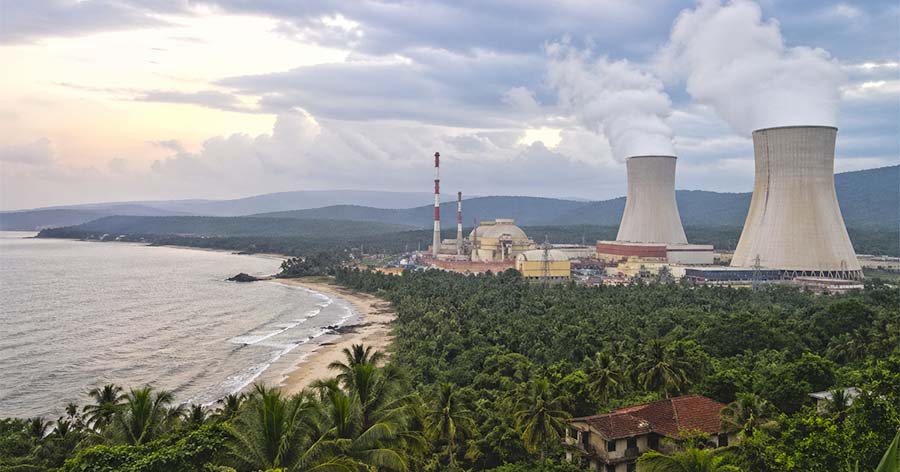
Karwar: A wave of unease is sweeping through parts of Coastal Karnataka, particularly in Bavikeri and surrounding villages of Ankola taluk in Uttara Kannada, following reports of a proposed nuclear power project in the region. The development has heightened concerns among residents already grappling with the impact of ongoing industrial expansion along the coast.
Sources indicate that preliminary groundwork for the project may have begun as early as January this year. However, the lack of official communication or public consultation has left locals concerned, with many saying they only recently became aware of the plan through informal channels.
The proposed site at Bavikeri lies barely 40 km from the existing Kaiga nuclear power station near Karwar. The area is also in close proximity to several strategic and infrastructure projects, including the proposed Keni port, the INS Kadamba naval base, the Vajrakosh naval armoury, and a planned airport at Alageri in Ankola — all within a radius of 10 to 15 km. This clustering of sensitive installations has added to public apprehension.
While nuclear power development in India has traditionally been controlled by the central government, recent policy shifts have opened the sector to greater participation from state governments and private players. Leveraging this change, the Karnataka government is reportedly exploring the possibility of setting up a nuclear facility independently — a move that, if realised, would be among the few state-led initiatives of its kind.
As part of the early-stage process, five locations across the state have been shortlisted for feasibility studies and geological assessments. These include Bavikeri in Uttara Kannada, Basur in Shivamogga district, Halkavati in Raichur, Bannikumati in Koppal, and Manur in Vijayapura district.
Officials are said to have held preliminary discussions with district authorities earlier this year, though no details have been disclosed publicly. Initial estimates suggest the project could require anywhere between 1,200 and 2,000 acres of land, depending on its generating capacity — ranging from 2,000 MW to 6,000 MW. An additional 100 to 150 acres may be earmarked for housing and support infrastructure.
With limited transparency and growing speculation, residents across Coastal Karnataka are calling for clarity, consultation, and a thorough assessment of the project’s environmental and social implications before any further steps are taken.