CD Web Desk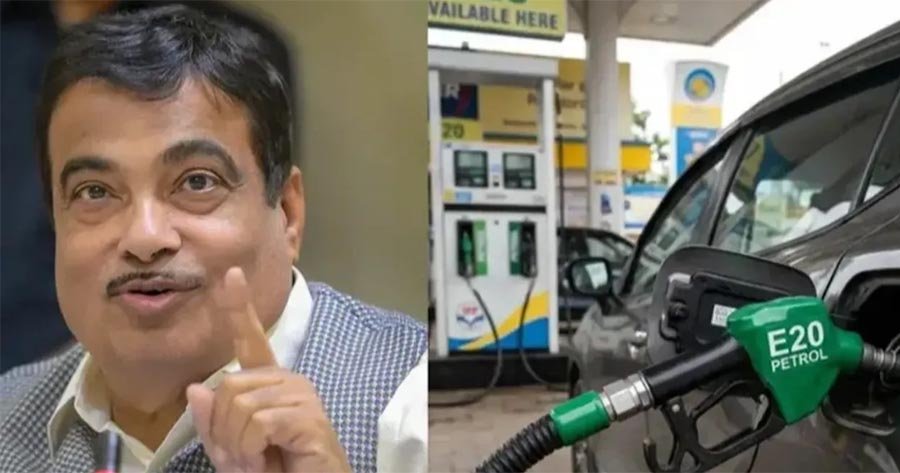
New Delhi: Certain rubber parts and gaskets in older BS-III vehicles manufactured before 2016 may require replacement when using E20 petrol, the Centre informed the Rajya Sabha on Wednesday. However, it maintained that the ethanol-blended fuel does not significantly affect overall vehicle performance or require engine modifications.
Replying to a question by CPI MP A A Rahim, Union Road Transport and Highways Minister Nitin Gadkari said studies conducted by the Indian Oil Corporation Limited (IOCL), the Indian Institute of Petroleum (IIP), Dehradun, the Society of Indian Automobile Manufacturers (SIAM), and the Automotive Research Association of India (ARAI) assessed the impact of E20 fuel on two- and four-wheelers.
According to the minister, the studies found that BS-VI vehicles continued to comply with emission norms when operated on E20 fuel. They also concluded that neither car nor two-wheeler engines require modifications to run on the ethanol-blended fuel.
Gadkari said the studies found no significant impact of E20 on vehicle performance, including in older vehicles.
“These studies confirmed that even legacy vehicles did not exhibit any significant variations in performance, nor do they show abnormal wear and tear when operated with E20 fuel. No issues were reported in parameters such as drivability, startability, metal compatibility and plastic compatibility,” he said.
However, he noted that testing on BS-III vehicles introduced from April 1, 2005, and manufactured before 2016 indicated that some rubber components could be affected.
“Only in case of testing done on BS-III vehicles introduced from April 1, 2005, and manufactured before 2016, some rubber parts and gaskets may require replacement, which can be easily managed during the routine servicing regime of the vehicle,” Gadkari said.
The clarification comes weeks after an ARAI study, which has not yet been made public, reportedly concluded that E20 fuel could affect rubber parts in vehicles originally designed for E10 petrol.
Mileage Depends on Multiple Factors
Addressing concerns over fuel efficiency, Gadkari said vehicle mileage cannot be linked to fuel type alone and depends on several operational and maintenance-related factors.
According to the government, fuel efficiency is influenced by driving habits, regular servicing, fuel quality, traffic conditions, tyre pressure, wheel alignment and air-conditioner usage.
Debate Over Ethanol-Blended Fuel
The Centre’s push to increase ethanol blending in petrol has sparked concerns among some vehicle owners and experts over its compatibility with older vehicles, engine performance and fuel efficiency.
While the government says it achieved its target of 20% ethanol blending (E20) ahead of schedule and maintains that all E10-compliant petrol vehicles can safely use E20 fuel, some consumers have reported reduced mileage, citing ethanol’s lower energy content compared with petrol.
The Ministry of Petroleum and Natural Gas has also issued a 10-point clarification to counter what it described as misinformation surrounding the E20 programme, stating that the initiative is backed by scientific studies, regulatory safeguards and international experience.