CD Web Desk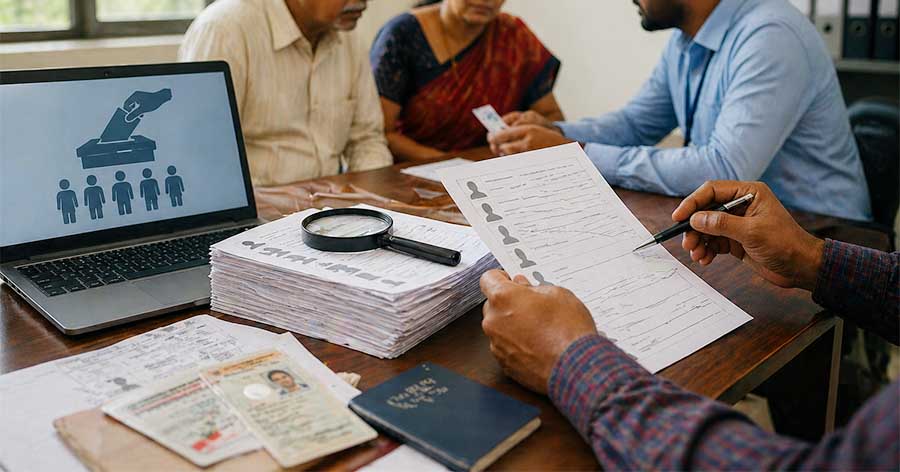
Bengaluru: Amid growing concern over Karnataka’s ongoing voter mapping exercise, Chief Electoral Officer V Anbukumar has reassured citizens that those left “unmapped” can still secure their place in the electoral rolls by following a defined process.
The current exercise—seen as a precursor to the proposed Special Intensive Revision (SIR)—aims to reconcile voter data from the 2002 and 2025 electoral rolls. According to the CEO, voters whose names appear in both sets of rolls are automatically treated as “self-mapped.” Those not listed in the 2002 rolls but connected to parents or grandparents who were registered at that time are categorised as “progeny” and are also mapped accordingly.
Who are “unmapped voters”?
These are individuals whose names cannot be linked either directly (self-mapped) or through family lineage (progeny) to the 2002 electoral database. In simple terms, they are voters whose records don’t match or trace back to older rolls, making their eligibility harder to verify through the current mapping system.
Addressing concerns, Anbukumar emphasized that such voters are not automatically excluded. Instead, they can apply for inclusion by submitting any of 11 approved documents to establish eligibility. Alternatively, eligible individuals can file Form 6 with the Electoral Registration Officer, either online or offline, to get their names added.
The Election Commission has clarified that the mapping process is primarily a “table-top exercise” conducted by Booth Level Officers (BLOs), which has sparked criticism over the lack of door-to-door verification. Additionally, voters are not being directly notified of their mapping status and must check it themselves—either online or by contacting their BLO.
To help voters verify their status, the CEO suggested using the ECI Net app, where individuals can enter their EPIC number and connect with their assigned BLO if needed.
The list of acceptable documents under the SIR process includes birth certificates, passports, educational certificates, government-issued identity or pension documents, domicile certificates, caste certificates, forest rights documents, NRC records, family registers, and land or housing allotment papers. Importantly, commonly used IDs like Aadhaar, PAN cards, and driving licences will not be accepted as standalone proof.
Officials reiterated that the process is intended to streamline and strengthen the voter database, while urging citizens—especially those who may be “unmapped”—to proactively verify their status and complete the necessary steps to ensure they remain on the rolls.