CD Web Desk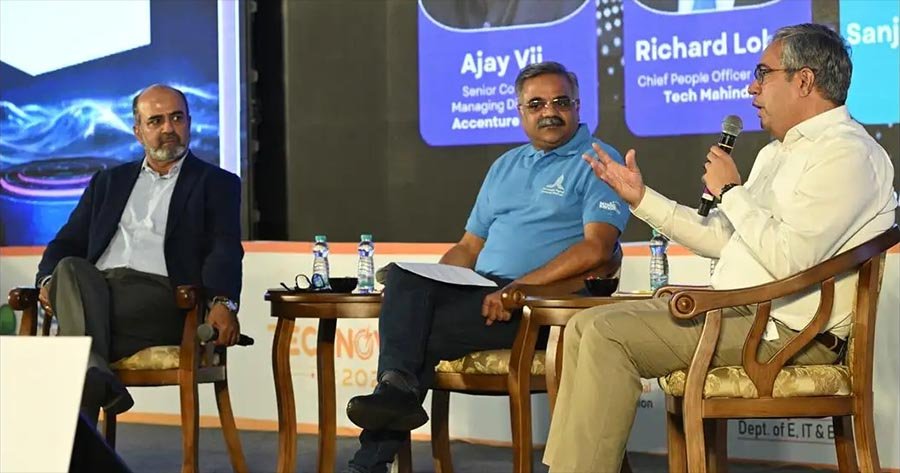
Mangaluru, Sept 24: Mangaluru’s prospects of emerging as a global capability centre (GCC) destination will depend on its ability to develop a distinct identity rather than compete directly with established technology hubs such as Bengaluru and Hyderabad, industry leaders said at Mangaluru Technovanza on Wednesday.
The city should identify sectors where it already has inherent strengths and build specialised capabilities around them, they said during a fireside chat titled ‘Mangaluru the Landing Station in the GCC Orbit: Ready?’ at the sixth edition of Mangaluru Technovanza at the Dr TMA Pai International Convention Centre.
Ajay Vij, senior country managing director, Accenture India, said companies across the world were reassessing their organisational structures, making access to talent and the choice of location increasingly important.
For Mangaluru to benefit from this shift, the city needs a long-term strategy focused on areas where it can establish a sustainable advantage, he said.
“The city must decide the niche it wants to play in. It could be tourism, healthcare, marine biology or any other area where it is already strong,” Vij said.
Richard Lobo, chief people officer, Tech Mahindra, said the GCC landscape had changed significantly, with companies increasingly looking beyond cost advantages while choosing locations.
“Today, investments in GCCs are driven more by capabilities offered than by size. Mangaluru should not become a duplicate of Bengaluru or Hyderabad. It should create its own unique proposition,” he said.
Lobo suggested that Mangaluru could position itself within a distributed talent model, in which companies operate teams across several smaller cities rather than concentrating their workforce in major metropolitan centres.
The speakers also emphasised the need for Mangaluru to establish itself as a business and technology destination by demonstrating tangible outcomes such as patents, projects and industry achievements rather than relying only on promotional campaigns.
Lobo said the large pool of Mangaluru-origin professionals occupying senior positions across the world could play a role in promoting the city as an investment and technology destination.
“If Mangaluru can build the specialised skills that the world will need three years from now, companies will come to the city,” he said.
Strengthening the talent pipeline, however, would require closer collaboration between industry and educational institutions, the speakers said. They called for curriculum redesign, faculty development, mentoring, industry sponsorship and joint research programmes.
They also stressed that greater investment in faculty development was essential, as teachers would play a key role in preparing students for emerging technologies and future industry requirements.
The session was moderated by Sanjeev Kumar Gupta, CEO, KDEM.