
 CD Web Desk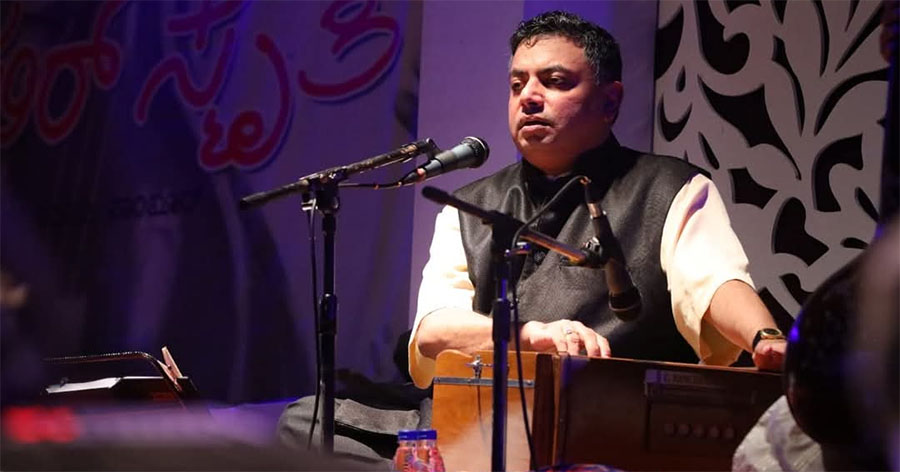
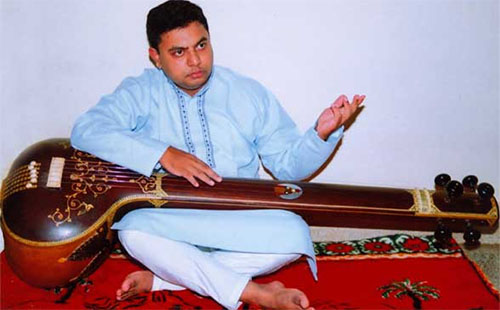
Mangaluru: In an age driven by instant fame and digital applause, Roshan Francis Martis represents a rarer tradition — that of quiet mastery, lifelong riyaz, and selfless transmission of knowledge. A Sangeet Alankar in Hindustani Classical Music and a respected teacher-scholar, Martis has devoted more than three decades to learning, teaching, and interpreting Indian classical music with intellectual depth and spiritual sensitivity.
Trained in the rigorous Hindustani tradition, Roshan Martis belongs to the lineage inspired by Ustad Amir Khan of the Indore Gharana. His music is marked by an unhurried exploration of Khayal and Tarana, refined Sargam articulation, and an academic sensitivity shaped by his parallel engagement with literature and musicology. For Martis, music is neither performance nor spectacle alone — it is inquiry, discipline, and devotion.
A Disciple Forged by Discipline
Martis’ formative years in music were shaped under the late Vidwan K. M. Dass at Bharatiya Vidya Bhavan, Mangaluru, where he trained intensively for twelve years. The relationship was one of uncompromising discipline — the kind that tests resolve and reshapes character. It was here that his guru recognised not only a performer, but a future teacher. That early initiation into pedagogy would later define Martis’ life’s work.
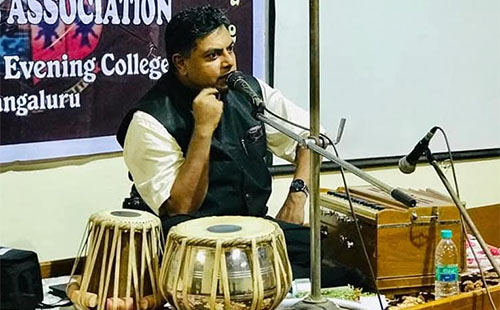
Alongside vocal music, he also trained for nearly a decade in tabla under the late Vidwan N. V. Murthy, deepening his command over rhythm and laya — a foundation that continues to inform his teaching of both vocal and instrumental music.
Martis’ academic formation reflects a rare and thoughtful synthesis of the humanities and the classical arts. After completing his undergraduate studies in Commerce, he went on to earn a Master’s degree in English Language and Literature, followed by a Bachelor of Education (B.Ed.), equipping him with both scholarly depth and pedagogical grounding. He has served as an English lecturer at two respected institutions in Mangaluru, where his engagement with language and literature has enriched his interpretative and analytical approach to music. His formal training in Hindustani classical music culminated in the Sangeet Alankar qualification from the 125-year-old Akhil Bharatiya Gandharva Mahavidyalaya, Mumbai — a nationally recognised institution known for its rigorous standards in classical music education.
Sur-Rang: A Classroom of Commitment
In 2008, guided more by conviction than comfort, Roshan Martis founded Sur-Rang Sangeet Vidya Mandir at Kadri, Mangaluru. What began modestly has evolved into a focused centre for Hindustani Classical training, rooted in the guru–shishya tradition. Today, Sur-Rang nurtures a new generation of students with an emphasis on discipline, listening, and internalisation — values increasingly rare in contemporary music education.
Martis is widely acknowledged as the only Sangeet Alankar in Hindustani Classical Vocal Music from the Konkani Catholic community after the Late Rev. Fr. Charles Vas till date, and his work has quietly expanded the community’s engagement with classical music as a serious art form.
Legacy Over Limelight
Despite opportunities abroad and the promise of financial comfort, Martis chose to remain rooted in India, close to his music, students, and cultural soil. Performance, for him, has always been secondary to pedagogy. His greatest fulfilment lies in witnessing music take root in his students — among them the next generation connected to the legacy of Wilfy and Meena Rebimbus, whose family has been a source of enduring encouragement and support in his journey.
For Roshan Francis Martis, music is not an escape from life, but a way of inhabiting it fully — with discipline, humility, and gratitude. His journey stands as a reminder that the most enduring contributions are often made away from the spotlight, sustained by faith in tradition and an unwavering commitment to passing it on.







Thank you for the wonderful writeup. I’m indeed grateful to Coastal Digest Web Desk
We are proud of you dear Roshan Sir. Congratulations and all the very best to your journey.
Thank you very much sir.
I can’t express his Good thinking and what he thought and his discipline they is many thing left to tell about my sir .I am lucky person to learn with me I got very best sir thank you sir
Thank you
I can’t express his good thing and what he thought and his discipline they is many thing left to tell about my sir.i am lucky person to learn him I got very best sir thank you sir
Thank you
I deeply appreciate Roshan’s unwavering commitment to music. My children have gained so much from his guidance and mentorship.
Thank you very much ma’am 😊